

Core Service
Rodent Exclusion in Florida: The Only Part of the Job That Ends It
Trapping empties your attic. Exclusion is what keeps it empty. It means finding every opening wider than about half an inch in your building envelope and sealing it permanently with materials a rat cannot chew.
Why Your Last Company Failed
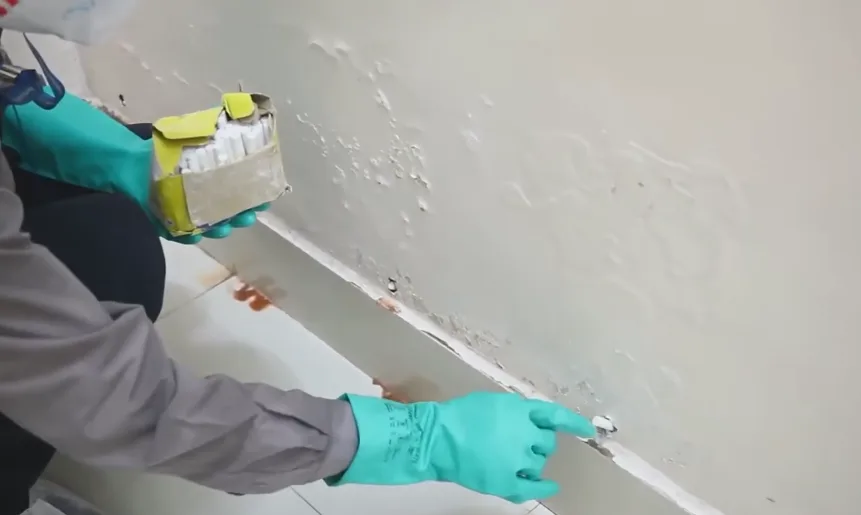
Everything You Have Been Paying For Was a Spray
If you are reading this you have probably already paid somebody. Usually a general pest control company on a monthly or quarterly plan. A technician treated the perimeter, set a few bait stations in the attic and left. The noise stopped for a while, then it came back.
That is not incompetence. It is a category error built into how the industry is structured. General pest control is chemical work aimed at insects, and it is priced as a subscription because insects genuinely do return and barrier treatments genuinely do degrade. The model works for what it is for.
Rodents are not insects. A roof rat in your attic is a mammal that walked through a specific physical hole in your building. It is not there because a chemical barrier lapsed. It is there because your soffit line is open, and no amount of product application closes an opening. You cannot spray a mammal out of an attic.
Until the hole is closed, every dollar is rent. You are paying to remove the current occupants of a building that is still open to the next ones, and because roof rats are territorial about good harborage, a vacated attic with an open entry does not stay vacant.
Florida law recognises the difference. Chapter 482 of the Florida Statutes, with rules in Chapter 5E-14 of the Florida Administrative Code, establishes a limited certificate authorising nonchemical methods to control commensal rodents, covering traps, mechanical devices and exclusionary techniques, requiring an examination and proof of bodily injury and property damage insurance. The state built a separate credential because it is separate work.
Want to know where your house is actually open? The inspection is free.
Materials
What Holds, and What Rats Chew Through
- Expanding foam. Chewed through within days. It is an air sealing product, not a rodent barrier, and finding it at your penetrations is a sign the last person did not do exclusion.
- Silicone and acrylic caulk. Chewed or peeled away, and it degrades fast in Florida UV and heat. Fine as a finish over metal, useless on its own.
- Steel wool. Rusts quickly in Florida humidity and then crumbles. A short term stopgap at best.
- Copper mesh. Does not rust, holds indefinitely when packed tight. The right answer for pipe and cable penetrations and irregular gaps.
- Galvanised hardware cloth. Correct for vents, soffit returns and larger openings. On coastal property the cut edges need sealing or salt air will attack them.
- Metal flashing. Soffit, fascia and roof to wall transitions. Fails only where the fastening is inadequate.
- Tile closures and bird stop. Essential on barrel and S tile roofs, and they need mechanical fixing or wind displaces them.
The test is simple. If a material can be chewed, it is not exclusion, it is cosmetics. Ask any company what they seal with before you agree to anything, and if the answer is foam and caulk you are buying a repeat visit.
Why Florida buildings fail specifically
Separated soffit and fascia, open tile ends at the eave, hip and ridge, degraded roof vent screening, stucco expansion gaps at the roofline, unsealed AC line sets and condensate penetrations, return air chases, garage door corner gaps, and lanai or pool cage attachment points. That list is not generic. It is what Florida construction hands a roof rat, and a competent inspection walks all of it.
The Process
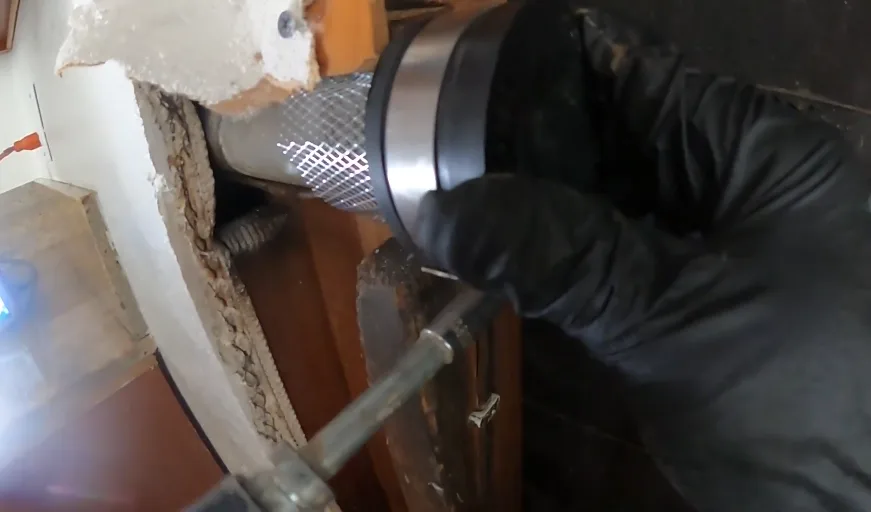
How Exclusion Is Done Properly
- Full inspection. Exterior roofline and attic surveyed, every opening photographed before anything is touched. Typically 45 to 90 minutes.
- One way doors and traps together. Animals already inside can leave and cannot return, while traps take the rest.
- Sealing. Every opening closed with the correct material for that condition, not one product used everywhere.
- Verification. A return visit confirming zero activity before the final opening is closed.
- Documentation. A written entry point map showing every opening found and what was done to each, plus the photo file and the warranty.
The order is not negotiable. Seal a house with rats still inside and they chew new openings to get out, or they die in your wall voids and you have an odour job instead. Verification before the last seal is what separates exclusion from guesswork.
Get a written entry point map and a warranty on the seal.
Cost
What Rodent Exclusion Costs in Florida
Exclusion prices by openings, not by rats, which is why square footage alone tells you very little. These are published national and Florida ranges so you know the shape before you call.
| Item | Typical range |
|---|---|
| Rodent inspection | $75 to $150, often credited against the job |
| Newer home, 3 to 5 entry points | $500 to $800 |
| Older home, 15 to 25 openings | $1,500 to $3,000 |
| One way exclusion doors | $200 to $400 each |
| Full rodent eviction programme | $600 to $1,400 |
Barrel tile sits at the higher end because closures generally have to run every open eave and hip line rather than being spot sealed. Coastal property costs slightly more if corrosion resistant mesh is specified, which on the barrier islands it should be. Published Florida data puts most residential rodent removal jobs between roughly $85 and $900 depending on severity, with full exclusion above that.
Questions
Frequently Asked Questions
What is the difference between rodent exclusion and pest control?
Pest control is chemical work aimed at insects. Exclusion is structural work: finding every opening larger than about half an inch and sealing it permanently with materials rodents cannot chew. Florida recognises the distinction in law, with a limited certificate under Chapter 482 covering nonchemical methods including traps, mechanical devices and exclusionary techniques.
What size gap can a roof rat get through?
Anything larger than about half an inch, roughly the diameter of a quarter. House mice need considerably less.
Do you seal before or after removing the rats?
Both together, finishing in the right order. One way doors let animals leave and not return while traps take the rest, and zero activity is verified before the last opening is closed. Sealing with rodents still inside makes it worse.
Why does spray foam not work?
Rats gnaw through expanding foam, caulk, wood, plastic and thin aluminium within days. Their incisors grow continuously and they chew constantly to keep them filed. Permanent exclusion needs galvanised steel mesh, copper mesh, heavy gauge hardware cloth, metal flashing or masonry.
How do I know the rats are actually gone?
Verification, not silence. Quiet for a few nights is not proof because activity fluctuates. Monitored traps and tracking confirm no new activity across a defined period before the final opening is closed. If a company says you will just stop hearing them, that is not a method.
Is exclusion licensed work in Florida?
Yes. Chapter 482 defines pest control to include the use of a mechanical device for preventing or controlling rodents in, on or under a structure, and it covers the advertisement and solicitation of that work. It is not general handyman work.
How long does it take?
Sealing is typically one to two days on site depending on the structure and the number of openings. Trapping and verification run alongside and generally take two to four weeks before zero activity is confirmed.
Are the operators you refer licensed?
Yes. Florida regulates pest control under Chapter 482, Florida Statutes, administered by FDACS, and rodent work falls under General Household Pest and Rodent Control. Your assigned operator provides their licence number on your written estimate and you can verify it through the FDACS licensee search at fdacs.gov before work begins.
Do you use poison?
Not as a default. A poisoned rat does not go outside to die, it dies inside your wall, which turns a rodent job into an odour job. And rodenticide creates secondary poisoning risk for Florida owls, hawks and other raptors, as well as for pets. The approach is mechanical: trapping plus permanent exclusion.
Related services: Rodent Inspection, Rat Removal, Soffit and Eave Sealing, Attic Restoration.
Coverage
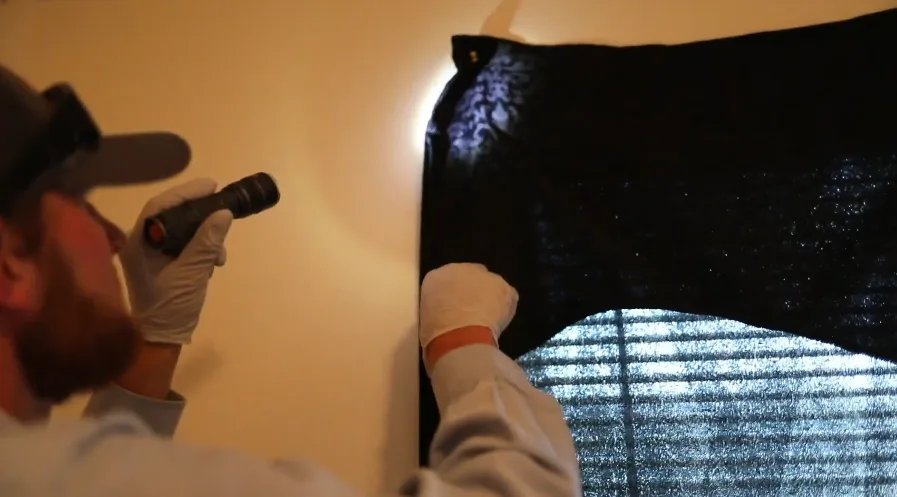
Rodent Exclusion Across Nine Florida Regions
Rodent Exclusion is available through the FDACS-licensed operators we refer across 178 Florida communities. The conditions differ by region, so pick yours below and the page will tell you what actually drives rodent problems there and every community we cover inside it.
Not sure which region you are in? Call with your ZIP and we will confirm coverage before anything is scheduled, or see the full Florida service area map.
Read Next
Guides Worth Reading Before You Book
Background reading that will help you judge a quote, understand what the work involves, and know what to expect before anyone comes out.
Stop renting the problem. Get the building sealed.