
Restoration
Attic Cleanup and Sanitising After Rodents
Droppings, urine, nesting material and the pheromone trail that draws the next colony in. This is the biohazard half of attic work, and the first thing to know is what not to do yourself.
Safety First
Do Not Sweep or Vacuum Rodent Droppings
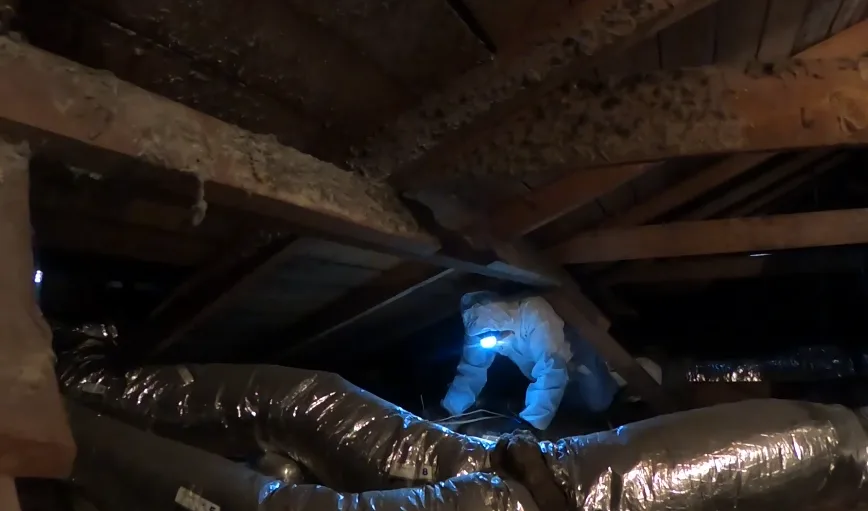
This is the most important sentence on this page, and it works against our own commercial interest to lead with it: do not sweep or vacuum rodent droppings yourself.
Disturbing dried droppings puts contaminated dust into the air you are standing in. A household vacuum makes it worse, because it agitates the material and then exhausts fine particles back into the room. Florida Department of Health rodent guidance directs homeowners toward identifying the evidence, gnawing, droppings, grease stains, tracks and nesting sites, rather than disturbing it.
Rodents are associated with several diseases relevant to Florida homeowners, including leptospirosis, hantavirus and salmonella, transmitted through droppings, urine and saliva. We are not going to inflate that into a scare campaign, because the realistic risk to a homeowner in an ordinary infestation is low. It is not zero, it rises with the amount of material and with disturbance, and the sensible response is to let somebody in proper protective equipment handle it rather than to panic.
Keep children and pets away from the attic access in the meantime, and do not store anything up there that you intend to bring back into living space without cleaning.
Found droppings? Leave them and get the attic assessed.
The Work
What Proper Decontamination Involves
- Full respiratory and skin protection. Not a dust mask.
- Removal of nesting material, droppings and contaminated debris. Physical removal first, because you cannot disinfect a pile of material.
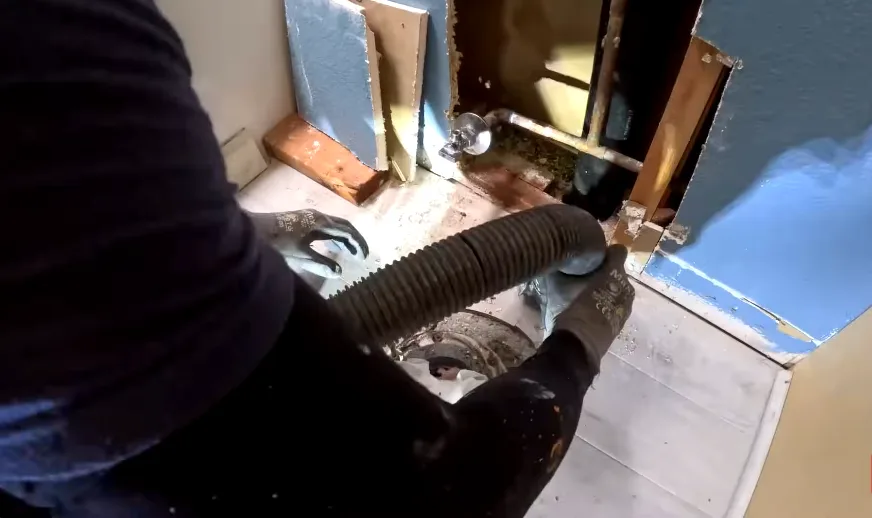
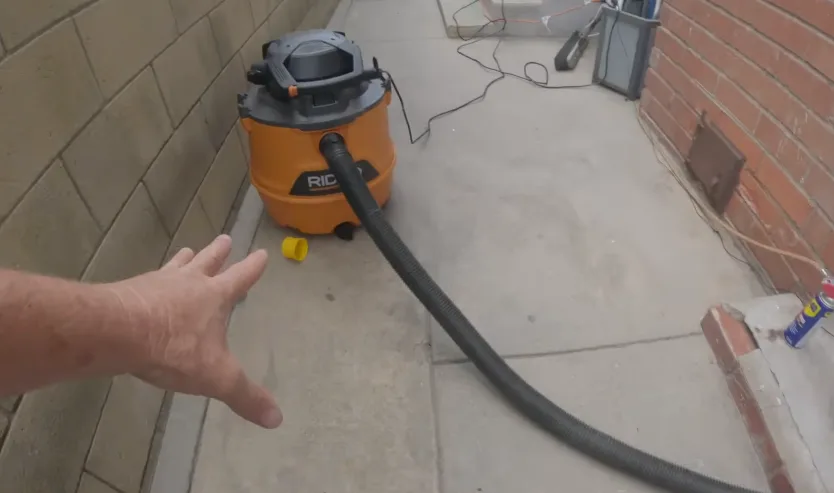
- HEPA filtered vacuuming. Not a shop vacuum, which exhausts fine particles back into the space.
- Enzymatic cleaner. Breaks down organic residue that ordinary disinfectant sits on top of.
- Appropriate antimicrobial treatment after the enzyme stage, not instead of it.
- Deodorising. The pheromone trail specifically, because the scent of a previous colony attracts the next one to the same route.
- Ductwork and return air path inspection. Because once contamination reaches the air path it stops being an attic problem.
The deodorising step is the one most commonly skipped and the one that matters most for recurrence. Rodents navigate by scent trail. An attic that has been cleaned but not deodorised still reads as an established colony site to the next animal that finds the roofline.
Cleaning is not the first step
Sanitising an attic before the animals are confirmed gone means paying for work that gets recontaminated within weeks. The correct sequence is inspect, exclude and trap together, verify zero activity, then clean. If a company proposes cleaning on the first visit before a single trap has been set, that is the expensive step being done before the effective one.
The Process
How Cleanup Runs
- Verification first. Zero rodent activity confirmed before cleanup begins.
- Assessment of extent. How far contamination reaches, and whether insulation can be cleaned or has to go.
- Physical removal. Nesting material, droppings and debris bagged and disposed of.
- HEPA vacuuming.
- Enzyme then antimicrobial treatment.
- Deodorising and final inspection, including ductwork and the return air path.
Cleanup alone is typically a single day. Where insulation has to come out as well, it becomes a full attic restoration and takes one to two days.
Get an honest assessment of how far it actually goes.
Cost
What Attic Cleanup Costs in Florida
These are published national and Florida ranges. Attic size, pitch and access drive the labour as much as contamination level does.
| Item | Typical range |
|---|---|
| Minor contamination, spot clean and treat | $150 to $600 |
| Attic cleanup and sanitising | $300 to $1,000 |
| Hourly rate where quoted that way | $200 to $260 |
| With insulation removal and replacement | $1,000 to $3,000 additional |
| Full attic remediation, all stages | $1,500 to $5,000 |
A low pitch attic with limited walkboard is slower and more expensive to work than a tall open one regardless of how much material is present, so two houses with identical contamination can quote differently for entirely legitimate reasons.
Questions
Frequently Asked Questions
Can I clean up the droppings myself?
Please do not sweep or vacuum them. Disturbing dried droppings puts contaminated dust into the air you are standing in, and a household vacuum agitates the material then exhausts fine particles back into the room. Florida Department of Health guidance directs homeowners toward identifying the evidence rather than disturbing it.
Is rodent contamination actually dangerous?
Rodents are associated with several diseases including leptospirosis, hantavirus and salmonella, spread through droppings, urine and saliva. For a typical homeowner in a typical infestation the risk is low but not zero, and it rises with the amount of material and with disturbance. Proper protective equipment and proper removal is the sensible response.
Why does deodorising matter?
Because rodents navigate by scent trail. An attic that has been cleaned but not deodorised still reads as an established colony site to the next animal that finds your roofline. It is the most commonly skipped step and the one that matters most for recurrence.
Do I need cleanup if the droppings are only in one spot?
Often a spot clean and treat is enough, and you should be told when that is the case rather than sold a full remediation. Extent, whether urine saturation is present, and whether the return air path is involved decide it.
Are the operators you refer licensed?
Yes. Florida regulates pest control under Chapter 482, Florida Statutes, administered by FDACS, and rodent work falls under General Household Pest and Rodent Control. Your assigned operator provides their licence number on your written estimate and you can verify it through the FDACS licensee search at fdacs.gov before work begins.
Do you use poison?
Not as a default. A poisoned rat does not go outside to die, it dies inside your wall, which turns a rodent job into an odour job. And rodenticide creates secondary poisoning risk for Florida owls, hawks and other raptors, as well as for pets. The approach is mechanical: trapping plus permanent exclusion.
Related services: Attic Restoration, Insulation Removal and Replacement, Dead Rodent Removal.
Coverage
Attic Cleanup and Sanitising Across Nine Florida Regions
Attic Cleanup and Sanitising is available through the FDACS-licensed operators we refer across 178 Florida communities. The conditions differ by region, so pick yours below and the page will tell you what actually drives rodent problems there and every community we cover inside it.
Not sure which region you are in? Call with your ZIP and we will confirm coverage before anything is scheduled, or see the full Florida service area map.
Read Next
Guides Worth Reading Before You Book
Background reading that will help you judge a quote, understand what the work involves, and know what to expect before anyone comes out.
Get the attic assessed before anyone starts cleaning.