

Wildlife
Squirrel Removal in Florida: The Legal Part Most Companies Get Wrong
Squirrels are not a pest control problem in the same sense rats are. They sit under FWC wildlife rules, and the promise you will hear from most companies about relocating them is not among the options Florida law provides.
The Law
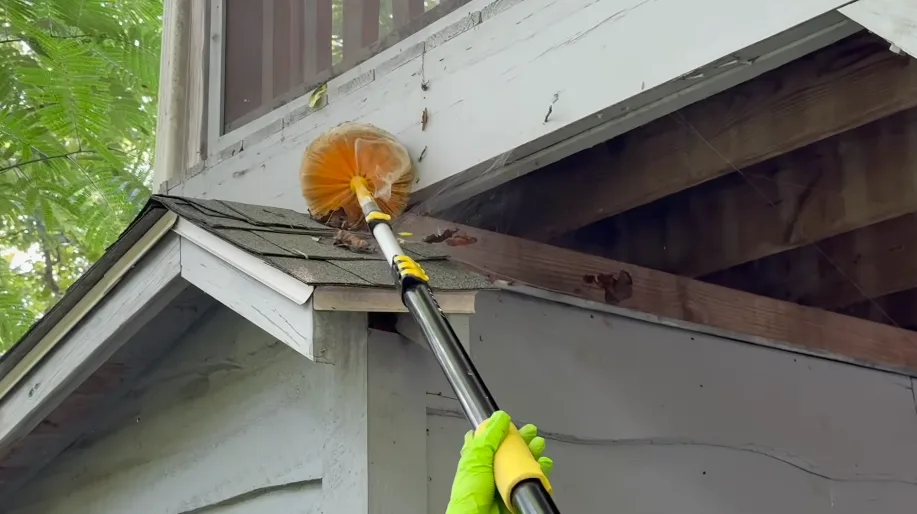
What Florida Actually Allows
Squirrels in Florida are regulated by the Florida Fish and Wildlife Conservation Commission rather than only by pest control law, and the rules under Florida Administrative Code 68A-9.010 are specific.
Nuisance wildlife may be taken using live traps or snares. All traps must be inspected at least once every 24 hours. Native nuisance wildlife may be released on the landowner’s property where it was captured, only if the release site and the capture site are on one contiguous piece of property. Nonnative wildlife may not be transported or relocated except for the purpose of euthanasia. A permit from an FWC regional office is required to use steel traps to take destructive mammals.
Read the third point again, because it contradicts what most homeowners are told. The promise that a company will humanely relocate your squirrels to the woods somewhere is not one of the options the state provides. Driving an animal across the county and releasing it is not legal, and it is not humane either, since relocated animals frequently do not survive in unfamiliar territory without an established food source or shelter.
We are telling you this knowing it makes for a less comfortable sales conversation than the alternative. You should know what you are actually buying, and you should be wary of anyone whose pitch depends on something the state does not permit.
Told your squirrels will be relocated to the woods? Ask which rule allows it.
Species
The Two Squirrels in Florida Attics
- Eastern gray squirrel. Active in daylight, noticeably heavier sounding than a rat, uses predictable entry points, and generally the more straightforward exclusion job. Damage tends to be gnawing at fascia, vents and gable louvres.
- Southern flying squirrel, Glaucomys volans. The difficult one. Nocturnal, so homeowners assume rats. Colonial, so there are usually many more than you think, sometimes dozens. Classified in Florida as a Species of Greatest Conservation Need, which calls for handling consistent with FWC guidance.
- Why misidentification matters. If you have flying squirrels and somebody treats them as rats, the job will be done wrong and it may be done illegally. Trap type, timing and legal handling all change.
- Both are year round denning risks, particularly in older construction with deteriorated rooflines.
The practical tell for flying squirrels is a nocturnal pattern with a heavier, more deliberate sound than rats, occasional gliding thumps onto the roof, and activity concentrated at dusk and just before dawn.
Timing and young
Squirrels have young in the attic, and exclusion carried out while dependent young are present separates them from the mother and leaves them to die inside your structure. That is both inhumane and a serious odour problem. A competent operator checks for young before sealing anything and times the work accordingly, which occasionally means waiting rather than proceeding immediately.
The Process
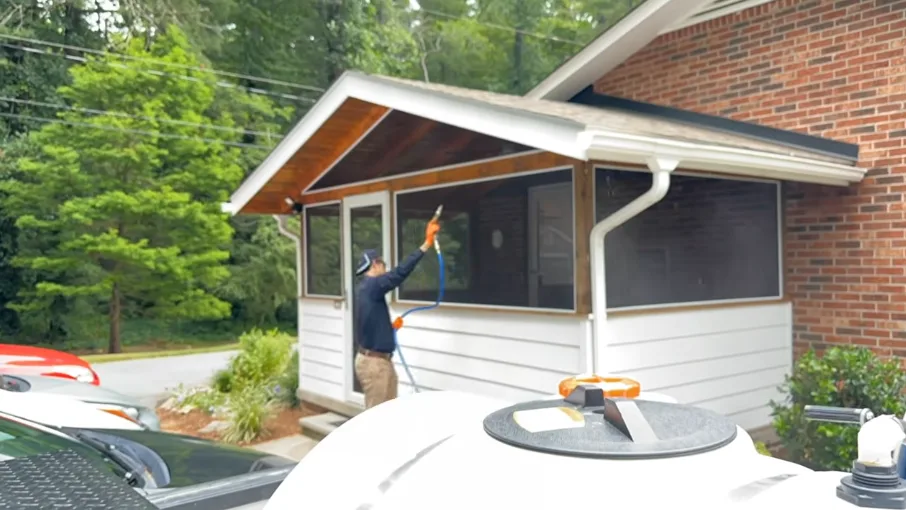
How Squirrel Work Is Done
- Species identification. Gray or flying, and whether young are present. This decides everything downstream.
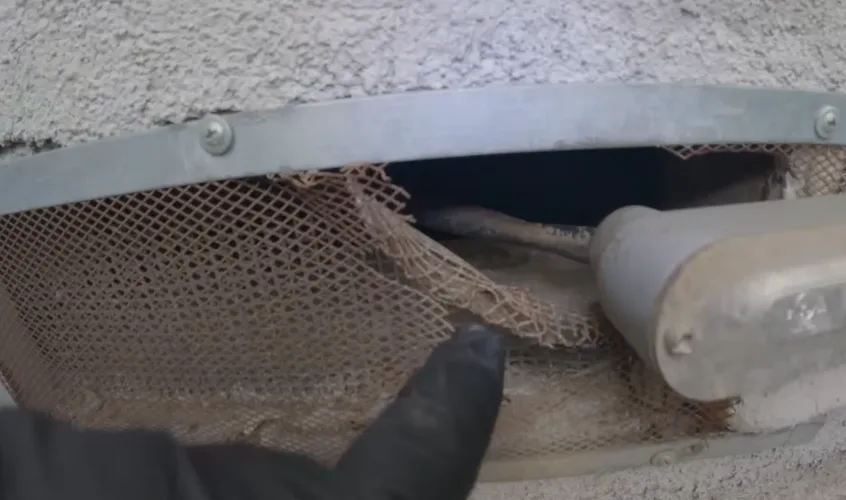
- Entry point survey. Full roofline, photographed. Gable louvres, fascia gnaw points, vents and roof to wall transitions.
- One way doors and trapping to FWC rules. Traps checked at least every 24 hours as required.
- Verification. Zero activity confirmed, and confirmation that no young remain inside.
- Exclusion. Sealed with metal, because squirrels gnaw more aggressively than rats and will reopen a soft repair.
- Attic assessment. Squirrel contamination and chewed wiring checked.
Squirrel exclusion generally needs heavier material than rat work. Gray squirrels will chew through repairs that would hold a roof rat indefinitely.
Get the species confirmed before anyone sets a trap.
Cost
What Squirrel Removal Costs
These are published national and Florida ranges. Squirrel work is often at the lower end for removal and the higher end for exclusion, because the sealing has to be more robust.
| Item | Typical range |
|---|---|
| Inspection and identification | $75 to $150 |
| Removal and exclusion | $350 to $750 |
| Attic cleanup and insulation replacement if needed | $1,000 to $3,000 |
| Heavier gauge exclusion for gray squirrels | Higher than equivalent rat work |
| Post removal electrical inspection | $100 to $200 |
Squirrels chew wiring like rats do, so a post removal electrical check is worth doing. Damaged wire insulation is a fire hazard that may not trip a breaker until it is too late.
Questions
Frequently Asked Questions
Can you relocate the squirrels to the woods?
No, and neither can anyone else legally. Under Florida Administrative Code 68A-9.010, native nuisance wildlife may be released on the property where captured only if the release site and capture site are on one contiguous piece of property. Nonnative wildlife may not be transported or relocated except for euthanasia.
Is it rats or squirrels in my attic?
Gray squirrels are active in daylight and sound heavier and more deliberate. Roof rats are nocturnal, lighter and faster, running the same route repeatedly. Southern flying squirrels are the tricky one, because they are nocturnal so people assume rats, and colonial so there are usually far more than you think.
What if there are babies in the attic?
Sealing while dependent young are present separates them from the mother and leaves them to die inside your structure, which is inhumane and creates a serious odour problem. Young are checked for before anything is sealed, and occasionally that means timing the work rather than proceeding immediately.
Why does squirrel exclusion cost more than rat exclusion?
Because the material has to be heavier. Gray squirrels gnaw far more aggressively than roof rats and will reopen a repair that would hold a rat indefinitely.
How often must traps be checked?
At least once every 24 hours, under Florida Administrative Code 68A-9.010. That is a legal requirement, not a courtesy.
Are the operators you refer licensed?
Yes. Florida regulates pest control under Chapter 482, Florida Statutes, administered by FDACS, and rodent work falls under General Household Pest and Rodent Control. Your assigned operator provides their licence number on your written estimate and you can verify it through the FDACS licensee search at fdacs.gov before work begins.
Do you use poison?
Not as a default. A poisoned rat does not go outside to die, it dies inside your wall, which turns a rodent job into an odour job. And rodenticide creates secondary poisoning risk for Florida owls, hawks and other raptors, as well as for pets. The approach is mechanical: trapping plus permanent exclusion.
Related services: Rodent Exclusion, Attic Restoration, Soffit and Eave Sealing.
Coverage
Squirrel Removal Across Nine Florida Regions
Squirrel Removal is available through the FDACS-licensed operators we refer across 178 Florida communities. The conditions differ by region, so pick yours below and the page will tell you what actually drives rodent problems there and every community we cover inside it.
Not sure which region you are in? Call with your ZIP and we will confirm coverage before anything is scheduled, or see the full Florida service area map.
Read Next
Guides Worth Reading Before You Book
Background reading that will help you judge a quote, understand what the work involves, and know what to expect before anyone comes out.
Hearing something heavier than a rat? Get it identified properly.