

Entry Points
Soffit and Eave Sealing in Florida
The most common roof rat entry in Florida is the gap where your soffit meets the fascia. From the ground it looks closed. From a ladder there is often a two inch channel running the entire length of the eave.
The Problem
Why Florida Soffits Separate
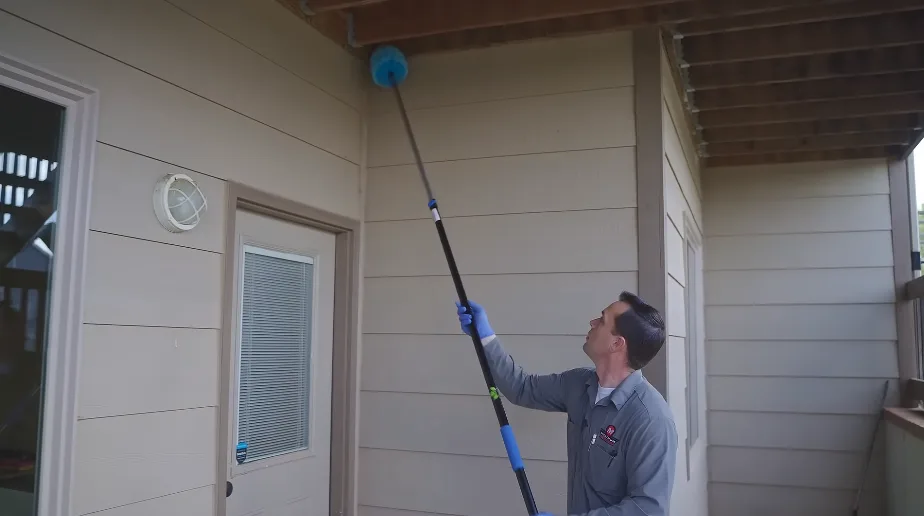
Vinyl and aluminium soffit panels are held in place by a channel at the wall and a channel at the fascia. Both move. Florida heat cycles the material daily, storm wind flexes the roofline, and roofing, gutter and fascia work disturbs the fixings. Over years the panel drops out of the fascia channel and leaves a continuous opening.
It is invisible from the ground because you are looking up at the underside of a panel that is still there. The gap is above and behind it, at the point where the panel should meet the fascia board, and you only see it from a ladder or from inside the attic looking out toward daylight.
This is the entry point that produces the classic Florida complaint: running and scratching directly overhead at night, starting shortly after dark, following the same route each time. The rat is coming in at the eave and moving along the top plate.
Two things make it worse here specifically. Storm flex opens gaps that then stay open for years because nobody goes looking after a named storm. And any recent roofing work is a strong predictor, because soffit disturbed during a reroof is frequently not reseated properly.
Roof worked on recently and now hearing noise? That is worth checking.
Related Failures
The Rest of the Roofline That Fails With It
- Fascia board rot and separation. Common where gutters have overflowed, and it takes the soffit channel with it.
- Open tile ends at eave, hip and ridge. Barrel and S tile leaves openings that run straight under the underlayment. Closures degrade in UV or get displaced by wind.
- Roof vent, turbine and ridge vent screening. Factory screening is thin and degrades in Florida UV until a rat can chew it.
- Gable end louvres. Often unscreened or screened with material that has long since failed.
- Stucco expansion joints at the roofline. Stucco over frame opens as the building moves, frequently invisible from the ground.
- Roof to wall transitions. Where a lower roof meets an upper wall, the flashing detail often leaves a gap.
A soffit job that only addresses the soffit is usually incomplete. The whole roofline is one system and a rat will simply walk to the next open point.
What it should be sealed with
Metal, not foam. Galvanised hardware cloth or metal flashing mechanically fixed, with the soffit panel reseated properly into the fascia channel rather than caulked over. Expanding foam and caulk are chewed through within days and their presence at an eave is a reliable sign the previous visit was cosmetic. On coastal property, cut edges on galvanised mesh need sealing or salt air will attack them within a few years.
The Process
How the Work Is Done
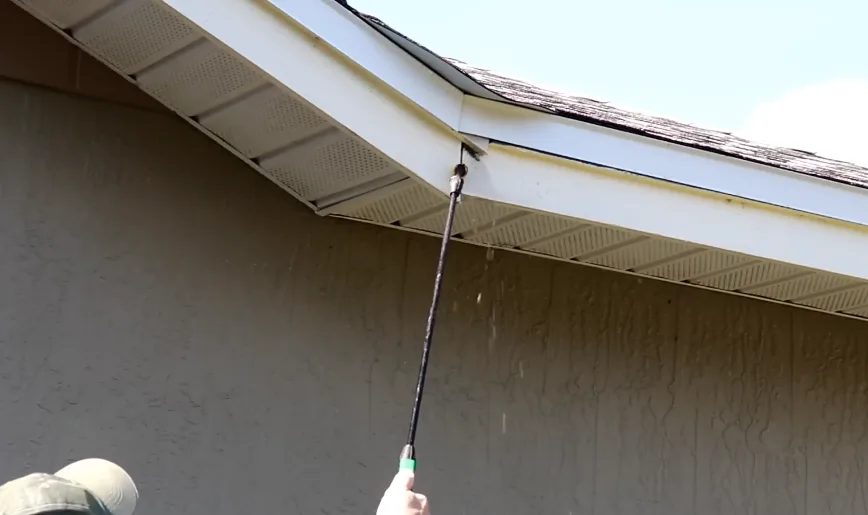
- Full roofline inspection from a ladder. Every run of eave checked, not just where noise was reported.
- Photographs before anything is touched. So you can see the gap you are paying to close.
- Trapping and one way doors first if there is activity. Sealing an occupied attic is the classic mistake.
- Panels reseated and openings sealed with metal. Fixed mechanically, finished so it looks right from the ground.
- Whole roofline addressed. Vents, tile ends, gable louvres and transitions, not only the soffit.
- Verification and written entry point map.
Typically one to two days on site depending on the size of the roofline and the number of runs affected, with trapping and verification running alongside where there is active infestation.
Get the whole roofline checked, not just where you hear it.
Cost
What Soffit and Eave Sealing Costs
These are published national and Florida ranges. Soffit work prices by linear run and by the number of related openings, not by house size.
| Item | Typical range |
|---|---|
| Inspection | $75 to $150, often credited against the job |
| Newer home, few openings | $500 to $800 |
| Older home, 15 to 25 openings | $1,500 to $3,000 |
| Tile roof closures along open runs | Higher end of the range |
| Fascia repair where rot is present | Quoted separately |
Tile roofs sit at the higher end because closures generally have to run every open eave and hip line rather than being spot sealed. If a quote for a tile roofed house looks unusually cheap, ask specifically whether closures run the full length or only where activity was seen.
Questions
Frequently Asked Questions
Why is the gap invisible from the ground?
Because you are looking up at the underside of a panel that is still in place. The opening is above and behind it, where the panel should seat into the fascia channel. You only see it from a ladder or from inside the attic looking toward daylight.
I had my roof done recently. Is that connected?
Very often, yes. Soffit disturbed during roofing, gutter or fascia work is frequently not reseated properly, and it is one of the strongest predictors of a new roof rat entry. If work was done and noise started afterwards, that is where to look first.
Can I just foam the gap myself?
It will not hold. Rats gnaw through expanding foam and caulk within days. The panel needs reseating and the opening needs metal, mechanically fixed. Foam at an eave is a reliable sign that a previous visit was cosmetic.
Does sealing the soffit fix the whole problem?
Only if the rest of the roofline is addressed with it. Vents, open tile ends, gable louvres, stucco expansion joints and roof to wall transitions all fail too, and a rat will simply walk to the next open point.
Are the operators you refer licensed?
Yes. Florida regulates pest control under Chapter 482, Florida Statutes, administered by FDACS, and rodent work falls under General Household Pest and Rodent Control. Your assigned operator provides their licence number on your written estimate and you can verify it through the FDACS licensee search at fdacs.gov before work begins.
Do you use poison?
Not as a default. A poisoned rat does not go outside to die, it dies inside your wall, which turns a rodent job into an odour job. And rodenticide creates secondary poisoning risk for Florida owls, hawks and other raptors, as well as for pets. The approach is mechanical: trapping plus permanent exclusion.
Related services: Rodent Exclusion, Rat Removal, Rodent Inspection.
Coverage
Soffit and Eave Sealing Across Nine Florida Regions
Soffit and Eave Sealing is available through the FDACS-licensed operators we refer across 178 Florida communities. The conditions differ by region, so pick yours below and the page will tell you what actually drives rodent problems there and every community we cover inside it.
Not sure which region you are in? Call with your ZIP and we will confirm coverage before anything is scheduled, or see the full Florida service area map.
Read Next
Guides Worth Reading Before You Book
Background reading that will help you judge a quote, understand what the work involves, and know what to expect before anyone comes out.
Get the eave line checked properly, from a ladder.