

Entry Points
The 9 Ways Rats Actually Get Into Florida Homes
Almost none of them involve chewing through anything. Florida rodents mostly walk in through openings that were designed in, degraded, or never properly closed.

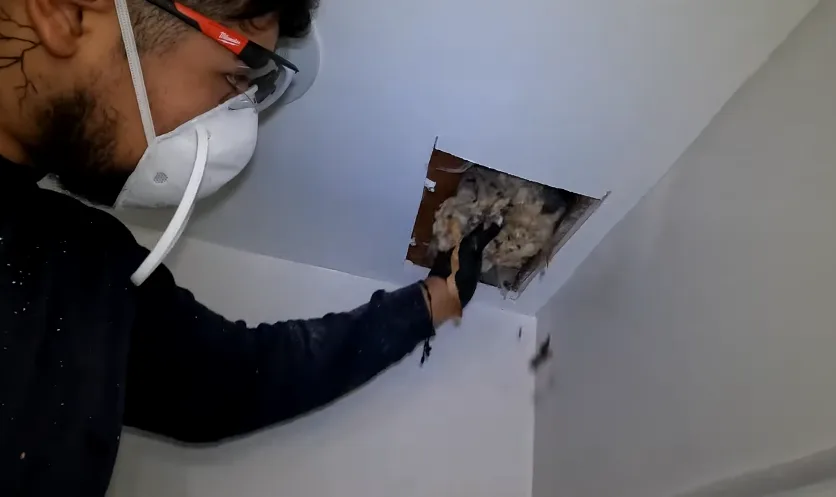
How do rats get into a Florida house?
Separated soffit returns are the most common, followed by open barrel tile ends at the eave and hip, unsealed AC line set and condensate penetrations, degraded roof and gable vent screening, garage door corner seals, palm frond skirts giving a route onto the roof, stucco expansion joints and roof to wall transitions, lanai and pool cage headers, and on raised or manufactured homes the underside through failed skirting. Rats need only about half an inch, roughly the diameter of a quarter.
Rodents can chew, and they do. But in Florida the overwhelming majority of entries are not chewed holes. They are openings that already existed: a construction detail that was never closed, a material that degraded in UV, or a component that moved with thermal cycling. Understanding that changes what you look for and what you should expect a quote to cover.
A roof rat needs a gap larger than about half an inch, roughly the diameter of a quarter. A house mouse needs considerably less, which is why mouse exclusion is finer detail work.
The List
1. Separated Soffit Returns
The most common roof rat entry in Florida and invisible from the ground. Aluminium soffit is held in a channel at the wall and a channel at the fascia, and both move with thermal cycling. Decades of Florida summers work panels out of the fascia channel, frequently along an entire elevation rather than at one point, which is why the fix is usually a full run rather than a patch.
2. Open Tile Ends at the Eave, Hip and Ridge
Barrel and S tile leaves a void at the end of each run that is meant to be closed with foam closures, mortar or purpose made bird stop. That closure material degrades in UV, cracks, gets displaced by wind, or was never fitted properly along the full run. Once it is gone the void leads under the tile straight into the attic. Rats do not chew through tile. They walk in at the open end.
3. Unsealed AC Line Set and Condensate Penetrations
The single most common opening on newer Florida construction. The hole is made by the HVAC installer and sealed with whatever was on the truck, which is almost always expanding foam. Rodents remove foam within days. The same applies to plumbing stub outs, dryer vents and electrical service entries, each sealed by whichever trade made the hole with nobody coordinating a final envelope check.
4. Degraded Roof, Gable and Turbine Vent Screening
Factory screening on roof vents, turbines, gable louvres and ridge vents degrades in Florida UV. Once it fails the vent is an open cavity. Gable louvres in particular are frequently unscreened or screened with material long since gone, and they are large enough for substantial nesting.
5. Garage Door Corner Seals
The classic Florida ground level entry, and the cheapest to fix. The bottom rubber seal compresses, cracks and pulls away over time, specifically at the corners where it meets the jamb. From the garage, the wall into the living space is rarely sealed to the standard the exterior is, and its penetrations are usually foam or nothing. This is why so many Florida mouse problems present as a kitchen issue rather than an attic one.
6. Palm Frond Skirts and Overhanging Canopy
The dead frond skirt on royal, coconut and Washingtonia palms, known as the palm boot, is prime harborage and it puts an animal at roof height. Mature oak canopy touching a roofline does the same job. Roof rats travel at height, so continuous canopy lets them move house to house without ever touching the ground. Cutting back at least six feet from the roofline is the most useful thing a homeowner can do themselves, subject to local tree ordinances.
7. Stucco Expansion Joints and Roof to Wall Transitions
Where a roof plane meets a wall, and where stucco meets a control joint, are junctions that are frequently watertight without being rodent tight. They are also awkward to see from the ground and easy to miss on a perimeter walk.
8. Lanai and Pool Cage Headers
Screen enclosures are not sealed envelopes. The header where the cage ties into the house almost always leaves a gap directly under the soffit line, the spline lifts at the base, door thresholds rarely seal, and the pool equipment pad creates sheltered harborage right at the wall.
9. The Underside of Raised and Manufactured Homes
On elevated, pier built and manufactured homes, the space underneath is dry, sheltered, temperature stable and almost never inspected. Vinyl skirting gets pushed aside rather than chewed, lattice is chewed, ground lines are uneven, and access hatches warp. Once the belly board wrap is torn there is direct access into the floor cavity where ductwork runs.
Check It Yourself
The Two Free Checks Worth Doing Today
- Look for daylight from inside the attic. Go up during daylight with the lights off, let your eyes adjust for a minute, and look toward the eaves. Any daylight is an opening large enough to matter.
- Check the garage door corners. Close the door and look at both bottom corners from inside. If you can see light or slide a finger under, that is an active route.
Want every opening on your house found and photographed? Inspection is free.
Questions
Frequently Asked Questions
What size hole can a rat get through?
Anything larger than about half an inch, roughly the diameter of a quarter. House mice need considerably less, which is why a specification written only for rats can leave openings a mouse walks straight through.
Do rats chew through roof tiles?
No, and it is the most common misunderstanding in South and Southwest Florida. Tile leaves voids at the eave, hip and ridge that are meant to be closed with foam closures, mortar or bird stop. When that closure degrades, the void leads under the tile into the attic and the rat simply walks in.
Why does my brand new house have rats?
New builds are not sealed builds. Soffit fitted to a settling structure opens gaps within a year or two, mechanical penetrations get foam sealed by whichever trade made the hole, and temporary construction openings often never got properly closed.
Can I seal the openings myself?
You can close some of them, but material choice decides whether it holds. Expanding foam and caulk are chewed through within days. Galvanised mesh, copper mesh, hardware cloth and metal flashing hold. And do not seal anything until you know the animals are out, or you trap them inside.
How do I find openings I cannot see from the ground?
You need a ladder, which is exactly why a proper survey includes one. Soffit separation, tile ends and roof to wall transitions are largely invisible from ground level, which is why so many homeowners are told they have a mystery.
Keep Reading