

Florida Rodent Control Referral Service | We Refer Only FDACS-Licensed Operators
Rodent Control in Florida That Ends the Problem Instead of Managing It
Roof rats do not leave because you sprayed. They leave when the hole is closed. We connect Florida homeowners with licensed operators who find every entry point on your roofline, seal it with materials rats cannot chew, remove what is already inside, and clean up the damage left in your attic. Serving 180 communities across nine Florida regions.
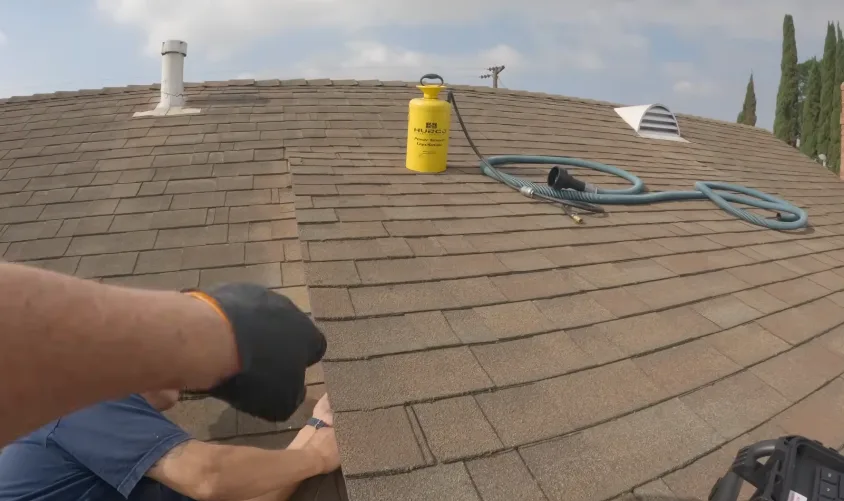
Everything You Have Been Paying For Was a Spray. This Is Carpentry.
Here is the sentence that explains why your rodent problem keeps coming back. You cannot spray a mammal out of an attic.
Most Florida homeowners with rats have already paid somebody. Usually a general pest control company on a monthly or quarterly plan. A technician treats the perimeter for ants, roaches and spiders, sets a few bait stations, and drives away. The scratching in the ceiling continues. Three months later the technician comes back and does the same thing.
That is not a failure of effort. It is a category error. General pest control is chemical work aimed at insects. Rodent control is structural work aimed at a mammal that got in through a hole in your building. Until the hole is closed, every dollar you spend is rent.
Florida law recognises the difference. The Structural Pest Control Act, Chapter 482 of the Florida Statutes, with rules in Chapter 5E-14 of the Florida Administrative Code, establishes a limited certificate specifically authorising nonchemical methods to control commensal rodents. That certificate covers traps, mechanical devices and exclusionary techniques, and it requires an examination plus proof of bodily injury and property damage insurance. The state treats exclusion as its own discipline because it is one.
What a real rodent job involves
- Walk the roofline and find every gap a roof rat can use, including the ones nobody looks at
- Photograph each one before anything is touched, so you can see what was found
- Install one way doors and traps so animals already inside can leave but cannot return
- Seal every opening with galvanised steel mesh, copper mesh, hardware cloth and metal flashing
- Return to verify zero activity before the last opening is closed
- Remove and replace contaminated insulation and sanitise the attic when contamination warrants it
- Provide a written entry point map and a written warranty on the exclusion work
Our Services
Rodent Control Services Across Florida
Rodent work splits into three jobs that most companies sell as one: getting the animals out, sealing the building so they cannot come back, and cleaning up what they left behind. Here is all of it.
Rodent Exclusion
The job that actually ends it. We find every gap wider than about half an inch on your roofline, then seal it with galvanised mesh, copper mesh and metal flashing. Foam and caulk get chewed through in days. Florida licenses this work separately, because it is carpentry rather than spraying.
Rodent Inspection
Free, and it is where every job starts. Someone walks your full roofline and attic, photographs every opening found, and gives you a written quote split by phase. Usually 45 to 90 minutes. You keep the photo file whether or not you go ahead with the work.
Rat Removal
Roof rats in the attic, Norway rats at ground level. Trapping and one way doors rather than poison, because a poisoned rat dies inside your wall rather than outside. Work continues until a verification visit confirms zero activity, and only then does the last opening get sealed.
Mouse Control
Mice fit through a smaller gap than rats, breed faster and leave far more droppings per animal. If you are hearing heavy running overhead, it is probably not mice. Getting the species right changes the trap sizing, the bait and the sealing detail, so identification comes first.
Attic Restoration
The full scope once the animals are out. Contaminated insulation removed, the space cleaned and sanitised, odour treated, then re insulated. Always in that order and always after verification. Anyone re insulating before the rats are confirmed gone is doing the expensive step before the effective one.
Attic Cleanup and Sanitising
Droppings, urine, nesting material and the pheromone trail that draws the next colony in. Full protective equipment, HEPA filtered vacuuming, enzyme cleaner and then an antimicrobial treatment. Do not vacuum droppings yourself. Disturbing dried material puts contaminated dust straight into the air you are standing in.
Insulation Removal and Replacement
Urine saturated insulation loses R value, and in Florida that shows up on your cooling bill for about nine months of the year. Vacuumed out, bagged and disposed of, the exposed roof deck inspected while it is visible, then new material blown in at the correct depth.
Dead Rodent Removal
The smell almost never starts where you smell it. Odour moves through wall voids and soffit returns, and air conditioning carries it further. We locate methodically instead of guessing, open one small access point only once the position is confirmed, then remove the carcass and the material around it.
Soffit and Eave Sealing
The most common roof rat entry in Florida. Vinyl and aluminium panels pull away from the fascia over time, and after storms or roof work there is often a two inch channel running the whole eave. Invisible from the ground. Sealed with metal, never with foam.
Solar Panel Rodent Proofing
The gap under your array is warm, sheltered and invisible from below. Rodents chew PV wire and nesting debris blocks the drainage path. Critter guard clips to the panel frame with J hooks and is never drilled, because drilling voids your equipment warranty. Existing nests come out first.
Squirrel Removal
Gray squirrels by day, flying squirrels by night, and the second are constantly mistaken for rats. Both sit under FWC wildlife rules rather than pest control law. Relocating them across the county is not legal in Florida, whatever you have been told. Identification first, then exclusion.
Commercial Rodent Control
Restaurants, retail, warehouses, HOAs and property management. Usually Norway rats rather than roof rats, which means ground level work: storm drains, dumpster pads, utility trenches and grease lines. Scheduled around your trading hours, with documentation you can hand to a health inspector.
Not sure what you are hearing up there? We will tell you for free.
The Rat in Your Attic Probably Has Five Names
Ask ten Florida homeowners what is in their attic and you will get five different animals. Roof rat. Palm rat. Fruit rat. Citrus rat. Black rat. They are all the same animal, Rattus rattus. The University of Florida IFAS Extension identifies the roof rat as the worst rodent pest in the state, more abundant, more destructive and harder to eliminate than the Norway rat, which is comparatively uncommon in Florida homes.
Roof rat, also called palm rat, fruit rat, citrus rat or black rat
- Body length 6 to 8 inches, total length 12 to 14 inches including the tail
- Weight 5 to 12 ounces
- The tail is longer than the body and hairless. This is the fastest field identification
- Sleek dark brown to black fur, large ears, pointed nose
- Droppings are black, banana shaped, a quarter inch to half an inch long
- Nests above ground: attics, soffit voids, wall cavities, palm fronds, hollow trees
- Excellent climber, using branches, vines and utility lines as highways to your roof
Norway rat, also called brown rat, sewer rat or street rat
- Larger, heavier, stockier build
- Tail is shorter than the body
- Ground dweller that burrows in soil and lives around storm drains, sewers and ground level commercial structures
- Far less common in Florida attics than roof rats, but a real problem around restaurants, dumpster pads and older commercial buildings
House mouse and southern flying squirrel
House mice are much smaller, fit through a much smaller opening, breed faster and produce far more droppings per animal. They are rarely the source of loud, heavy activity overhead. The southern flying squirrel, Glaucomys volans, is the most commonly misidentified attic animal in Florida. It is nocturnal, so homeowners assume rats, and it is colonial, so there are usually more than you think. It is classified in Florida as a Species of Greatest Conservation Need, which changes how it must be handled. Identification comes before anyone sets a trap.
What Rats Actually Sound Like, and the One Sign Most People Miss
Roof rats are nocturnal. The complaint we hear most often is not a sighting. It is a sound.
- Scratching, scurrying or running directly overhead, most often between dusk and about two in the morning
- Repeated movement along the same route night after night, because rats follow established runways
- Gnawing, a slower and harder sound than running
- Droppings in the attic, garage, along baseboards or on top of ductwork
- Greasy rub marks where they squeeze through the same gap repeatedly
- A musky ammonia odour that strengthens as the population grows
- Shredded insulation, paper or fabric formed into nesting beds
- Daylight visible through gaps when you look up from inside the attic
The sign almost nobody explains. If you are hearing activity during the day, the population has grown large enough that animals are being pushed to forage outside their normal hours. Daytime noise is not a different kind of rat. It is a bigger colony, and it usually means attic contamination is already significant. A single roof rat sighting is also almost never a single roof rat. They are social and they nest communally.
Why Florida Houses Fail: The Entry Points We Find Over and Over
A rat needs an opening larger than about half an inch, roughly the diameter of a quarter. Florida construction hands them dozens.
The roofline
- Soffit and fascia gaps. The most common roof rat entry in Florida. Vinyl and aluminium soffit panels separate from the fascia over time, especially after storm flex and after roof work. From the ground it looks closed. From a ladder there is a two inch channel running the length of the eave.
- Barrel tile and S tile roofs. Florida’s signature roof leaves open tile ends at the eave, the hip and the ridge. Those openings run straight under the underlayment into the attic void. Foam closures and mortar break down or get displaced by wind.
- Roof vents, turbine vents, ridge vents and gable vents. Factory screening is thin, degrades in Florida UV, and rats chew through it. Gable end louvres are a standing invitation.
- Roof to wall transitions and stucco expansion joints. Stucco over frame construction has expansion gaps at the roofline that open as the building moves, frequently invisible from the ground.
Mechanical penetrations and ground level
- Air conditioning line sets. Where refrigerant and condensate lines pass through the exterior wall, the sleeve is often sealed with nothing more than caulk or a wad of foam. Rats remove both.
- Return air chases and attic ductwork. In many Florida homes the return air path travels through the attic. Once rats are in the attic and the duct is compromised, contamination moves into conditioned living space.
- Plumbing vents, dryer vents and electrical service penetrations. Every one is a hole through your envelope sealed with a material a rodent can chew.
- Garage door bottom seal. Rubber seals compress, crack and pull away at the corners. The corner gap where the seal meets the jamb is a standard entry.
- Lanai and pool cage attachment points. Where the screen enclosure ties into the house there is almost always a gap at the header or mounting rail.
- Weep holes and stem wall penetrations. Less common for roof rats, primary for Norway rats.
The landscape, and the palm boot problem
Palm boots are the dead frond bases left on a palm trunk, and roof rats nest inside them. The species giving them the best cover in Florida are Washingtonia (Mexican fan palm), Sabal (cabbage palm, Florida’s state tree) and date palms, because those produce the thickest dead frond skirt and the heaviest seed and fruit load.
Here is the counterintuitive part. Trimming the frond skirt removes the harborage and the fruit clusters, but it will not eliminate an infestation already established inside your house. Tree work is prevention. It is not treatment. Any company telling you a trim will fix an active attic infestation is selling you the cheap half of the job.
Citrus, mango, avocado, loquat and lychee are all roof rat food. The diagnostic sign, unmistakable once you know it, is fruit hollowed out while still hanging on the branch. Roof rats also walk power and cable lines like a bridge, so your neighbour’s oak can be the on ramp to your roof. Bird feeders and outdoor pet food are the two attractants homeowners genuinely do not think about.
Found daylight through a gap, or droppings in the attic? Get it looked at.
Florida Rodent Season Is Not One Season. It Is Four.
Florida’s climate removes the winter pressure that limits rat populations in northern states. Where temperatures do not reliably drop below freezing, rodents breed year round. But activity is not flat. It moves in four distinct waves, and which one hits you depends on where in Florida you live.
1. Citrus and fruit season, September through March
The classic Florida roof rat window. As citrus ripens the food source shifts, and the colony living outdoors in the palms and fruit trees moves closer to and then into the structure. Strongest in the citrus belt: the Treasure Coast, Polk and Highlands, and the Lake, Marion, Citrus and Sumter counties.
2. Hurricane season, June 1 through November 30
Two separate mechanisms. Before the storm, rodents respond to falling barometric pressure, shifting wind and rising humidity by seeking shelter, often while the system is still well offshore. UF/IFAS urban entomology confirms May through November is prime time for both storm activity and pest pressure in Florida, and that flooding displaces vertebrate pests and makes them more likely to enter structures. After the storm, ground burrows and palm boot harborage flood, roof damage opens new entry points, and displaced animals move to higher and drier ground. Your attic is higher and drier ground.
3. Summer heat and drought
The wave most Florida homeowners do not expect. When summer heat dries out outdoor water and foraging, and when afternoon thunderstorms and flash flooding disrupt ground nests, rodents move indoors looking for water and dry shelter. If you are hearing scratching in July, that is not unusual and it is not a different pest.
4. Cool weather, October through February, in North Florida only
This is where most statewide rodent advice gets it wrong. Northeast Florida is genuinely different from South Florida. St. Augustine, Fernandina Beach, Orange Park, Fleming Island, Green Cove Springs, Macclenny and Starke sit in a colder zone than Naples or Boca Raton. There is a real cold break there, and it produces a real temperature driven push indoors from roughly October through February. If you live in Naples, Marco Island, Bonita Springs, Boca Raton, Delray Beach or Jupiter, there is effectively no off season. If you live in St. Augustine, Yulee or Lake City, there is a season, and it is starting now. We write our seasonal guidance by region because Florida is not one climate.
Attic Restoration: What Rats Leave Behind
Removing the animals is the first half of the job. The attic is the second half, and it decides whether your home is actually clean, whether your power bill goes back down, and whether the next inspection passes.
The sequence, and why the order is not negotiable
- Inspect. Full roofline and attic survey, entry points documented and photographed.
- Exclude and trap together. One way doors let animals leave and not return, while traps take the rest.
- Verify. Return and confirm zero activity before the last opening is closed.
- Then remediate the attic. Not before.
Seal a house with rats still in it and you get two outcomes, both bad. They chew new openings to get out, which means fresh structural damage. Or they die inside the wall voids, which is how a rodent job becomes a dead rodent job.
And here is the part that costs some companies money to say. Any operator who sanitises and re insulates your attic before the animals are confirmed gone is doing the expensive step first and the effective step second. If somebody quotes you insulation replacement on the first visit, before a single trap has been set, ask them why.
Attic cleanup and sanitising
Do not sweep or vacuum rodent droppings yourself. Disturbing dried droppings puts contaminated dust into the air you are standing in. Florida Department of Health rodent guidance directs homeowners to look for the evidence, gnawing, droppings, grease stains, tracks and nesting sites, and to identify the problem rather than clean it up unprotected.
Rodents are associated with several diseases relevant to Florida homeowners, including leptospirosis, hantavirus and salmonella, transmitted through droppings, urine and saliva. We are not going to inflate that into a scare campaign. The realistic risk in an ordinary infestation is low, it is not zero, and the correct response is to let somebody in proper protective equipment handle the material. Proper decontamination means full respiratory and skin protection, removal of nesting material and contaminated debris, HEPA filtered vacuuming rather than shop vacuuming, enzymatic cleaner followed by an appropriate antimicrobial treatment, deodorising to remove the pheromone trail that attracts the next colony, and inspection of ductwork and return air paths.
Do you actually need new insulation?
Sometimes no, and you should be told so. Light droppings across a small area of otherwise intact insulation can often be spot cleaned and treated. Replacement is genuinely warranted when there is widespread urine saturation, which is what destroys R value and what you cannot spot clean; when insulation has been flattened into nesting beds across a significant area; when contamination has reached the return air path; or when odour persists after cleaning, which means the material is holding it.
Why it matters more in Florida than up north: compressed and contaminated insulation loses R value, and here that shows up as a cooling load penalty across roughly nine months of the year rather than a heating penalty across three. There is also a hidden benefit nobody advertises. Pulling insulation is the only time anyone gets an unobstructed look at the underside of your roof deck and the top plates of your walls, so it doubles as the most thorough structural survey your attic will ever get.
Attic already contaminated? Ask what it actually needs before you pay for insulation.
Dead Rodent Removal and Odour: The Call Nobody Plans For
You are not shopping. You have people coming over, the house smells, and you cannot find it.
How long does it last. In Florida heat and humidity, decomposition is faster and more intense than in a cooler climate, and an unconditioned attic in July compounds that. Depending on the size of the animal, where it died and how much airflow reaches it, the odour typically peaks in the first week to ten days and then declines over several weeks. A rat in a hot attic is a shorter, sharper curve. A rat in a cool interior wall void is a longer, lower one.
Why you cannot find it. The smell almost never originates where you smell it. Odour travels through wall voids, soffit returns and the paths air already moves through in your house, and air conditioning return airflow drags it further. The strongest point in a hallway can be twenty feet from the animal.
The connection to poison, which is the whole point. If a company baited your attic with rodenticide, this is the predictable outcome. A poisoned rat does not go outside to die. It dies inside your building envelope. That is one of two reasons poison is not the default here. The other is Florida’s raptors: secondary poisoning, where an owl or a hawk eats a poisoned rodent, is a real consequence of rodenticide use in a state with the bird population Florida has, and it affects dogs and cats too. The alternative is mechanical. Trapping, one way exclusion doors and permanent sealing. That is what rat removal without poison looks like when somebody means it.
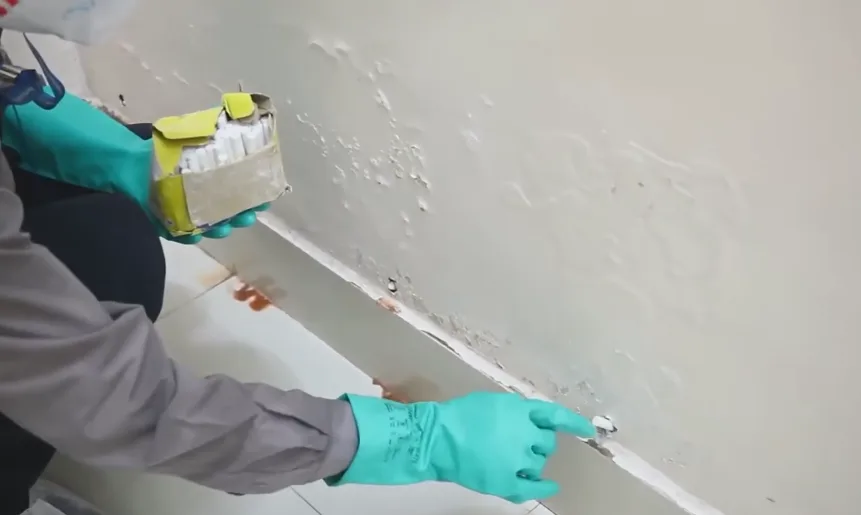
Rodent Proofing Solar Panels: The Florida Problem Nobody Is Servicing
Florida is one of the largest residential solar markets in the country, and the gap under a rooftop array is warm, sheltered, invisible from the ground, and directly above your roof deck. Roof rats, squirrels and birds find it immediately. Almost no pest control company in Florida offers this properly, and almost no solar installer wants to handle the animal side. That is why the problem persists.
How you find out you have it
Most homeowners do not discover this by seeing a rat. They discover it through the system: an unexplained production drop on the monitoring app, inverter fault codes and particularly ground faults, scratching from the roof rather than from inside the attic, droppings on the panel faces or the racking, and nesting debris visible at the array perimeter.
What is happening under there, and the warranty issue
Rodent incisors grow continuously and rodents gnaw to keep them filed. PV wire insulation is ideal material. Chewed insulation causes ground faults, system underperformance and a genuine electrical hazard on your roof. Separately, nesting debris blocks the drainage path under the array, so water pools on the roof deck instead of running off. And pest damage can fall outside manufacturer warranty coverage, with claims denied on the basis that the system was not properly protected or maintained.
How critter guard is installed correctly
- Never by drilling. Drilling into panel frames or the roof to attach a guard can void your equipment warranty outright. Correct installation uses J hooks or compression clips that grip the interior lip of the panel frame. No penetrations, no warranty exposure.
- Material: galvanised or PVC coated, UV rated wire mesh, cut to the height of the gap between panel and roof.
- Aperture: around half an inch. Small enough to exclude mice and small birds, large enough to preserve airflow and let roof debris drain.
- Sequence: any existing nest must be removed first. Installing a guard over an active nest seals animals under your array.
- Maintenance: annual re inspection, because storm debris and roof movement open gaps.
Squirrel Removal in Florida: The Legal Part Most Companies Get Wrong
Squirrels are not a rodent problem in the same sense that rats are. They sit under the Florida Fish and Wildlife Conservation Commission, not just FDACS, and the rules are specific. Under Florida Administrative Code 68A-9.010:
- Nuisance wildlife may be taken using live traps or snares
- All traps must be inspected at least once every 24 hours
- Native nuisance wildlife may be released on the landowner’s property where captured, only if the release site and capture site are on one contiguous piece of property
- Nonnative wildlife may not be transported or relocated except for the purpose of euthanasia
- A permit from an FWC regional office is required to use steel traps to take destructive mammals
Read that third point again. The promise you will hear from a lot of companies, that they will humanely relocate your squirrels to the woods somewhere, is not among the options the state provides. Driving an animal across the county and releasing it is not legal, and it is not humane either, because relocated animals frequently do not survive. We are telling you this knowing it makes for a less comfortable sales conversation than the alternative. You should know what you are actually buying.
Two squirrels turn up in Florida attics. The eastern gray squirrel is active in daylight, makes a heavier sound than a rat, uses predictable entry points, and is generally the more straightforward exclusion job. The southern flying squirrel is the difficult one: nocturnal, so homeowners assume rats; colonial, so there are usually many more than you think; and classified in Florida as a Species of Greatest Conservation Need, which calls for handling consistent with FWC guidance. If you have flying squirrels and someone treats them like rats, the job will be done wrong and it may be done illegally. Identification comes first, every time.
180
Florida Communities
9
Regions Covered
FDACS
Licensed Operators Only
$0
Inspection Cost
No Poison
Mechanical By Default
Florida Rodent Threats
Smell in the house right now? Odour calls get priority.
The 5 Things Quietly Letting Rodents Into Florida Homes
People move to Florida for the weather, the space and the neighbourhoods. The same climate and construction that shaped those neighbourhoods works against your building envelope every single day.
01. Soffit and Fascia Separation
Vinyl and aluminium soffit panels separate from the fascia over time, accelerated by storm flex and by roofing work. From the ground the eave looks closed. From a ladder there is often a two inch channel running its entire length. This is the most common roof rat entry in Florida and the one homeowners find last, because nobody inspects their own soffit line.
What actually helps: An annual roofline inspection from a ladder, sealing with galvanised mesh and metal flashing rather than caulk or foam, and re inspecting after any roof or gutter work.
02. Barrel and S Tile Roof Openings
Florida’s signature roof leaves open tile ends at the eave, the hip and the ridge, and those openings run straight under the underlayment into the attic void. The foam closures and mortar meant to block them break down in UV, get displaced by wind, or were never installed properly. A rat does not climb through the tile. It walks in at the open end.
What actually helps: Purpose made tile closures or bird stop, mechanically fixed along every open run, not just where activity was seen.
03. Palm Boots and Overhanging Canopy
Palm boots are the dead frond bases left on the trunk, and roof rats nest inside them. Washingtonia, Sabal and date palms give the thickest skirt and heaviest fruit load. Combine that with oak canopy touching the roof and utility lines running property to property, and you have a continuous elevated highway onto your roofline that never touches the ground.
What actually helps: Trim frond skirts and cut branches back at least six feet from the roofline. Understand that this is prevention, not treatment. It will not clear an infestation already inside the structure.
04. Mechanical Penetrations Nobody Sealed Properly
Every air conditioning line set, condensate line, plumbing vent, dryer vent and electrical service entry is a hole through your envelope. The trade that made the hole sealed it with whatever was on the truck, usually caulk or expanding foam. Rats remove both within days. When the compromised route is a return air chase, contamination stops being an attic problem and starts moving into conditioned living space.
What actually helps: Re seal every penetration with copper mesh packed behind sealant, or with metal escutcheon plates. Inspect after any HVAC, solar or plumbing work.
05. Storm Damage That Opened New Routes
Hurricane season runs June 1 through November 30, and UF/IFAS confirms May through November is prime time for both storm activity and pest pressure in Florida, with flooding displacing vertebrate pests and making them more likely to enter structures. The bigger long term effect is structural. Lifted tile, flexed soffit, torn screening and displaced ridge vent create entry points that did not exist before the storm, and they stay open for years because nobody goes looking.
What actually helps: A roofline inspection after any named storm, and scheduling exclusion in the calm window from June through early July rather than while a system is in the cone.
Exclusion Materials
What Actually Holds, and What Rats Chew Through
Rat incisors grow continuously and they gnaw constantly to keep them filed. Most of what gets used to “seal” a house is decorative. Here is how the common materials actually perform in Florida.
| Material | Holds against rats? | How it fails here | Correct use |
|---|---|---|---|
| Expanding foam | No | Chewed through within days. Offers no resistance at all. | Air sealing only, never as a rodent barrier |
| Silicone or acrylic caulk | No | Chewed or peeled away. Degrades fast in Florida UV and heat. | Finishing over a metal barrier |
| Steel wool | Partly | Rusts quickly in Florida humidity, then crumbles. | Short term stopgap only |
| Copper mesh | Yes | Does not rust. Holds indefinitely when packed tight. | Pipe and cable penetrations, irregular gaps |
| Galvanised hardware cloth | Yes | Can corrode at cut edges in coastal salt air if unsealed. | Vents, soffit returns, larger openings |
| Metal flashing | Yes | Fails only where fastening is inadequate. | Soffit, fascia, roof to wall transitions |
| Tile closures / bird stop | Yes | Displaced by wind if not mechanically fixed. | Barrel and S tile eave, hip and ridge ends |
| Wood or plywood patch | No | Gnawed through. Also rots in Florida humidity. | Structural repair only, always with metal over it |
The test is simple. If a material can be chewed, it is not exclusion, it is cosmetics. Ask any company what they seal with before you agree to anything. If the answer is foam and caulk, you are buying a repeat visit.
Before Anyone Arrives
Hearing Something Right Now? Do These 5 Things First.
- Note the time and the location. Write down when you hear it and roughly where. Dusk to 2am running overhead means roof rats. Daytime and heavier means squirrels. Nocturnal but colonial means flying squirrels. That one detail changes the entire plan and the legal framework it falls under.
- Do not sweep or vacuum any droppings. Disturbing dried droppings puts contaminated dust into the air you are standing in. Florida Department of Health guidance directs homeowners to identify the evidence, not disturb it. Keep children and pets away from the attic access.
- Do not put down poison. A poisoned rat does not go outside to die, it dies inside your wall. It also creates secondary poisoning risk for Florida raptors and for pets. This is the most common way a rodent problem becomes an odour problem.
- Photograph anything you can safely see. Droppings, gnaw marks, damaged soffit, hollowed fruit under a tree. Do not climb onto a storm damaged roof and do not enter a cramped or contaminated attic to get a picture.
- Bring pet food and bird feeders inside tonight. They are the two attractants homeowners consistently overlook, and removing them starts reducing pressure immediately.
Before You Hire Anyone
What to Demand From Any Rodent Company in Florida, Including the Ones We Refer
- An FDACS licence number you can verify. Florida regulates pest control under Chapter 482, Florida Statutes. Rodent work falls under General Household Pest and Rodent Control. Verification takes two minutes through the FDACS licensee search at fdacs.gov and rules out most bad actors immediately.
- Confirmation that exclusion is included, and what it is sealed with. Chapter 482 covers mechanical devices for controlling rodents, so exclusion is licensed work. If the answer is foam and caulk, walk away.
- A written, itemised price split by phase. Removal, exclusion and restoration priced separately, so you can see what you are buying and what happens if the attic turns out worse once insulation comes up.
- Photographs of every entry point, before and after. If nobody can show you the holes, nobody found the holes.
- A verification visit before the last opening is sealed. Ask how they confirm the animals are gone. If the answer is “you will stop hearing them,” that is not a method.
- A written warranty on the seal, with a term on it. Not a promise to come back and spray again. A warranty on the physical work.
Pricing
Want to know which of these five your house has? That is what the free inspection is for.
What Rodent Control Costs in Florida
Most Florida pest control websites answer this with a monthly plan price for general insect service, which does not answer the question. These are published national and Florida ranges so you understand the shape of pricing before you call anyone. Your number depends on entry point count, roof type, attic access and contamination.
| Service | Typical range |
|---|---|
| Rodent inspection | $75 to $150, often credited against the job |
| Rat trapping and removal | $150 to $600 |
| Attic rat removal with trapping and exclusion | $400 to $1,200 |
| One way exclusion doors | $200 to $400 each |
| Full rodent eviction programme | $600 to $1,400 |
| Attic cleanup and sanitising | $300 to $1,000 |
| Attic insulation removal and replacement | $1,000 to $3,000 |
| Full attic remediation, all stages | $1,500 to $5,000 |
Published Florida specific data puts most residential rodent removal jobs between roughly $85 and $900 depending on severity. Exclusion prices by openings, not by rats. A newer home with three to five entry points typically runs $500 to $800 in sealing. An older home with fifteen to twenty five openings can run $1,500 to $3,000. Barrel tile is more labour than architectural shingle. A low pitch attic with limited walkboard is slower and more expensive than a tall, open one.
Insurance & Inspections
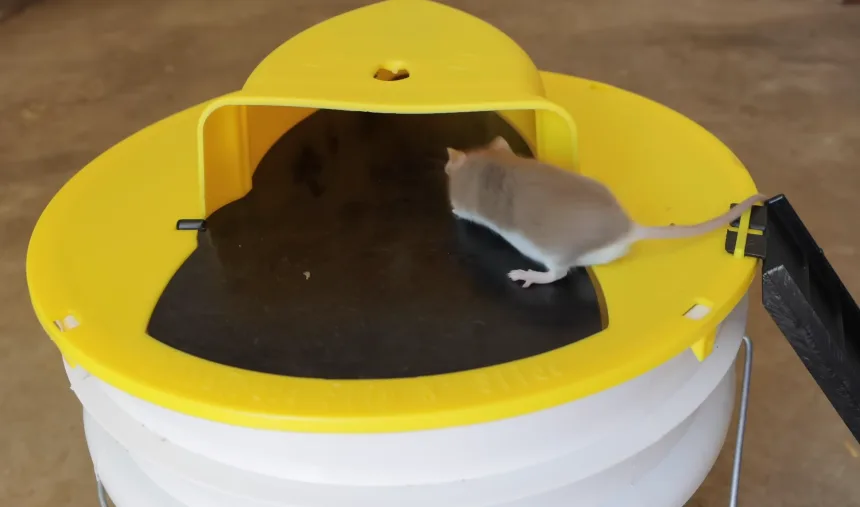
Rodent Damage, Your Insurance, and the Florida 4 Point Inspection
Homeowners insurance is designed to cover sudden and accidental loss. Insurers classify rodent infestation as gradual and preventable, which is why damage caused by rodents is excluded under most standard policies, with many excluding infestation, nesting and the discharge of waste products by name. The exception is secondary damage: if rodents chew wiring and that causes a fire, the fire damage may be covered while the removal, the cleanup and the chewed wiring are not. Coverage varies by carrier. Read your policy. We are a referral service, not an insurance advisor.
Then there is the part that catches Florida homeowners out. Most Florida insurers require a 4 point inspection to bind or renew a policy on an older home. It covers roof, electrical, plumbing and HVAC, and the electrical review includes the condition of visible wiring in accessible areas, which includes the attic. Rodent chewed attic wiring can surface in a 4 point inspection and put your renewal at risk, in a state where coverage is already difficult and expensive to hold. The same applies to the WDO inspection standard in Florida real estate transactions and the wind mitigation inspection. All three send somebody into the attic. If you are working to a closing or renewal deadline, say so when you book.
How It Works
Read Next
Guides Worth Reading Before You Book
Nine guides written for Florida conditions specifically: identifying what you have, understanding how it got in, and knowing what the work should cost.
Get a written quote split by phase, so you can see exactly what you are paying for.
What Happens When You Call
- You call or book online. Tell us what you are hearing, where, and at what time of night. That alone narrows the species.
- Free inspection, no obligation. You get a call before anyone arrives. Every time.
- Full exterior roofline and attic inspection. Typically 45 to 90 minutes depending on the size of the house and attic access.
- Written quote and photo file the same day, itemised by phase so you can see what is exclusion, what is removal and what is restoration.
- The work is done in the correct order, with a return visit to verify zero activity before the last opening is closed.
- You get your entry point map and your written warranty.
Why Local Matters
Why Florida Homeowners Use Us
- Rodents only. Not a general pest company with rodents as a line item under termites and mosquitoes.
- We refer only FDACS licensed operators. Ask any company for their licence number and verify it through the FDACS licensee search at fdacs.gov.
- Somebody calls before they arrive. The most common reason Florida homeowners leave their current pest company is not failed treatment. It is that nobody called and nobody answered the phone.
- You get photographs. Every entry point photographed before and after. A spray cannot show you that.
- A written entry point map. A document showing every opening found and what was done to each. If you sell the house, hand it to the buyer.
- Poison is not the default. Mechanical trapping and permanent exclusion, because poisoned rats die inside your walls and because rodenticide creates secondary poisoning risk for Florida raptors and for pets.
- We tell you when you do not need something, including insulation replacement, which is the largest line on most attic invoices.
Service Area
We Know Florida Region by Region, Not Just by ZIP Code
We cover 180 communities across nine Florida regions. The rodent problem genuinely differs between them: Naples has no cold break and breeds year round, Northeast Florida gets a real temperature driven push indoors from October, the Treasure Coast runs on citrus season, and Southwest Florida is still working through post Ian roof reconstruction. Same species, different job.
Southwest Florida Lee & Collier | 33901 33905 33907 33908 33912 33913 33916 33919 33936 33957 34102 34104 34109 34110 34112 34114 34119 34120 34134 34135 34145
Why here is different: The most tropical part of the state. Royal and coconut palms, mango trees, no meaningful cold break and genuinely year round roof rat pressure. Four years after Hurricane Ian made landfall as a Category 4 in September 2022, this region is still full of rebuilt and repaired rooflines, and every new tile run, soffit and penetration is an opportunity that did not exist before the rebuild.
Fort Myers, Naples, Lehigh Acres, Bonita Springs, North Fort Myers, Estero, Fort Myers Beach, Marco Island, Sanibel, Captiva, Immokalee, Alva, Bokeelia, St. James City.
Space Coast Brevard | 32780 32796 32901 32903 32904 32905 32907 32908 32909 32920 32922 32926 32927 32931 32934 32935 32937 32940 32951 32952 32953 32955
Why here is different: Barrier islands, the Indian River Lagoon, and housing stock shaped heavily by the 1960s Apollo era build out through Cocoa, Rockledge and Titusville. Sixty year old slab homes with sixty year old soffit and fascia detail, plus lagoon side vegetation corridors that function as continuous harborage between properties.
Palm Bay, Melbourne, Titusville, Merritt Island, Cocoa, Rockledge, Viera East, Cocoa Beach, Satellite Beach, Cape Canaveral, Melbourne Beach, Indialantic, Mims, Malabar, Grant, Sharpes, Scottsmoor.
Volusia & Flagler Volusia & Flagler | 32110 32114 32117 32118 32119 32124 32127 32128 32129 32130 32132 32135 32136 32137 32141 32164 32168 32169 32174 32176 32180 32190 32713 32720 32724 32725 32738 32744 32759 32763 32764
Why here is different: Two large planned communities give this region unusually uniform construction, which is genuinely useful. Palm Coast was built out by ITT through the 1970s and 1980s, and Deltona is a Mackle Brothers development from the 1960s and 1970s. When the housing stock is uniform, the entry points are uniform. Daytona adds older beachside stock with a completely different profile.
Daytona Beach, Palm Coast, Port Orange, Ormond Beach, Deltona, DeLand, New Smyrna Beach, Edgewater, DeBary, Orange City, Flagler Beach, Holly Hill, Bunnell, Lake Helen, Osteen, Oak Hill, Pierson, Seville, De Leon Springs.
Treasure Coast Indian River, St. Lucie, Martin, Okeechobee | 32948 32957 32958 32960 32962 32963 32966 32967 32968 32970 32971 32976 33455 34945 34946 34947 34949 34950 34951 34956 34957 34972 34974 34981 34982 34990 34994 34996 34997
Why here is different: This is Indian River citrus country and the strongest citrus rat region in our footprint. When fruit ripens from September onward, colonies living in the groves and in residential citrus move toward and then into structures. If you have citrus in the yard here and you are finding fruit hollowed out while still hanging on the branch, you are watching the cycle start. Hurricane Nicole made a rare November landfall just south of Vero Beach in 2022.
Fort Pierce, Vero Beach, Stuart, Sebastian, Palm City, Jensen Beach, Hobe Sound, Okeechobee, Indiantown, Wabasso, Winter Beach, Roseland, Fellsmere.
Lake, Sumter, Marion & Citrus Lake, Sumter, Marion & Citrus | 32159 32162 32163 32726 32736 32756 32757 32778 32784 33513 34420 34431 34432 34433 34434 34436 34442 34446 34448 34450 34452 34453 34460 34461 34464 34470 34471 34472 34473 34474 34475 34476 34479 34480 34481 34482 34488 34491 34705 34711 34714 34715 34731 34736 34748 34755 34785 34788
Why here is different: Two very different markets in one region. The Villages is a large 55 and over community with uniform housing, HOA governance and a significant seasonal population, which creates a specific problem: homes sitting empty for months while an infestation establishes undetected, and the first sign is the smell when you open the door in November. Marion and Citrus counties bring Nature Coast conditions, spring fed river corridors, horse country and an entirely different building stock.
Ocala, Clermont, The Villages, Leesburg, Inverness, Crystal River, Homosassa, Dunnellon, Mount Dora, Eustis, Lady Lake, Tavares, Belleview, Groveland, Minneola, Wildwood, Beverly Hills, Pine Ridge, Lecanto, Floral City, Hernando, Ocklawaha, Summerfield, Silver Springs, Umatilla, Fruitland Park, Astatula, Bushnell.
Northeast Florida St. Johns, Clay, Nassau, Putnam, Baker, Bradford, Columbia | 32003 32011 32024 32025 32033 32034 32043 32046 32055 32063 32065 32068 32073 32080 32081 32082 32084 32086 32091 32092 32095 32097 32112 32131 32145 32148 32177 32233 32250 32259 32266 32656
Why here is different: This region gets different advice on purpose. Northeast Florida has a genuine cool season and it produces a real temperature driven push indoors from roughly October through February. If a company gives you the same seasonal advice in Fernandina Beach that it gives in Naples, it is running a template. St. Augustine, founded in 1565, has historic coquina and masonry structures where standard exclusion materials do not apply. And the St. Johns and Ponte Vedra corridor is one of the fastest growing new construction markets in Florida, which is why we get so many calls that start “but the house is brand new.”
St. Augustine, St. Johns, Ponte Vedra, Ponte Vedra Beach, Orange Park, Fleming Island, Middleburg, Jacksonville Beach, Atlantic Beach, Neptune Beach, Fernandina Beach, Yulee, Green Cove Springs, Lake City, Palatka, Macclenny, Starke, Keystone Heights, Asbury Lake, Callahan, Hilliard, Interlachen, Crescent City, East Palatka, Hastings, Elkton.
Polk & Highlands Polk, Highlands, DeSoto, Hardee | 33823 33834 33836 33837 33838 33839 33841 33843 33844 33846 33850 33851 33852 33853 33859 33860 33868 33870 33872 33873 33875 33876 33880 33881 33884 33890 33896 33897 33898 34266
Why here is different: Citrus belt, lake country and mature oak canopy, a combination that produces heavy roof rat pressure. Winter Haven’s chain of lakes and the surrounding canopy give rodents continuous overhead routes between properties without ever touching the ground. Hurricane Milton crossed central Florida after its 2024 landfall near Siesta Key.
Winter Haven, Sebring, Davenport, Lake Wales, Haines City, Auburndale, Avon Park, Lake Placid, Mulberry, Lake Alfred, Arcadia, Dundee, Fort Meade, Frostproof, Polk City, Eagle Lake, Lake Hamilton, Highland City, Wauchula, Bowling Green, Zolfo Springs.
Palm Beach County Palm Beach | 33401 33403 33404 33405 33406 33407 33408 33409 33410 33411 33412 33413 33414 33415 33417 33418 33419 33421 33426 33428 33430 33431 33432 33433 33434 33435 33436 33437 33444 33445 33446 33458 33460 33461 33462 33463 33467 33469 33470 33472 33473 33476 33477 33478 33480 33483 33484 33486 33487 33493 33496 33498
Why here is different: The highest property values in our footprint and the strongest market for full attic restoration. Tropical zone, no cold break, year round activity. It also has the heaviest concentration of gated and HOA governed communities, which raises a question we answer constantly: when rodents get into a condo or townhome, who is responsible for the roof, the attic and the exclusion work. The answer lives in your governing documents, and we work with association management as well as individual owners.
West Palm Beach, Boca Raton, Boynton Beach, Delray Beach, Jupiter, Palm Beach Gardens, Wellington, Lake Worth Beach, Loxahatchee, Royal Palm Beach, Riviera Beach, North Palm Beach, Lantana, Palm Beach, Belle Glade, Pahokee, South Bay, Canal Point.
Greater Orlando Orange, Seminole, Osceola | 32701 32703 32707 32708 32709 32712 32714 32730 32732 32746 32750 32751 32762 32765 32766 32771 32773 32789 32792 34741 34743 34744 34746 34747 34758 34759 34760 34761 34769 34771 34772 34773 34786 34787
Why here is different: Enormous variation inside one region. Winter Park has 1920s housing under mature oak canopy, which is close to ideal roof rat habitat. Horizon West is brand new construction. Apopka, historically the centre of Florida’s foliage nursery industry, brings dense ornamental landscaping. And Kissimmee carries a large vacation home and short term rental inventory, which is its own rodent story: properties unoccupied between guests, high turnover, and a problem that surfaces as a guest complaint rather than an owner noticing.
Kissimmee, St. Cloud, Sanford, Winter Park, Apopka, Oviedo, Altamonte Springs, Winter Garden, Ocoee, Windermere, Lake Mary, Longwood, Casselberry, Winter Springs, Maitland, Horizon West, Pine Hills, Wekiwa Springs, Oakland, Geneva, Christmas.
Questions Florida Homeowners Ask
Frequently Asked Questions
Are palm rats and roof rats the same thing?
Yes. Roof rat, palm rat, fruit rat, citrus rat and black rat are five common names for one species, Rattus rattus. They are called palm rats in Florida because they nest in the dead frond skirts of palm trees, and citrus or fruit rats because citrus and other fruit are a primary food source. Same animal, same treatment.
What is the difference between rodent exclusion and pest control?
Pest control is chemical work aimed at insects. Rodent exclusion is structural work: finding every opening larger than about half an inch in your building envelope and sealing it permanently with materials rodents cannot chew. Florida recognises the distinction in law, with a limited certificate under Chapter 482 covering nonchemical methods including traps, mechanical devices and exclusionary techniques for commensal rodents.
Do you seal the entry points before or after removing the rats?
Both together, finishing in the right order. One way exclusion doors let animals leave but not return, while traps take the rest. Zero activity is verified before the last opening is closed. Sealing a house with rodents still inside makes it worse: they chew new openings to escape, or they die inside the walls.
What size gap can a roof rat get through?
Anything larger than about half an inch, roughly the diameter of a quarter. House mice need considerably less.
Why does spray foam or caulk not work?
Rats gnaw through expanding foam, standard caulk, wood, plastic and thin aluminium within days. Their incisors grow continuously and they chew constantly to keep them filed. Permanent exclusion requires galvanised steel mesh, copper mesh, heavy gauge hardware cloth, metal flashing or masonry.
How do I know if the rats are actually gone?
Verification, not silence. Quiet for a few nights is not proof, because rodent activity fluctuates. Monitored traps and tracking confirm no new activity across a defined period before the final opening is closed. Ask any company how they verify. If the answer is that you will stop hearing them, that is not a method.
Why am I hearing them during the day?
Roof rats are nocturnal. Daytime activity generally means the population has grown large enough that some animals are foraging outside their normal hours. It usually indicates a larger colony and more attic contamination than a strictly nighttime pattern.
Is that a rat or a squirrel in my attic?
Gray squirrels are active in daylight and make a heavier, more deliberate sound. Roof rats are active at night with lighter, faster, repetitive scurrying along the same runways. Southern flying squirrels are the difficult one: nocturnal, so people assume rats, colonial, so there are usually more than you think, and classified in Florida as a Species of Greatest Conservation Need, which changes how they must be handled.
Can you relocate squirrels to the woods?
No, and neither can anyone else legally. Under Florida Administrative Code 68A-9.010, native nuisance wildlife may be released on the property where captured only if the release site and capture site are on one contiguous piece of property. Nonnative wildlife may not be transported or relocated except for euthanasia. Traps must be checked at least once every 24 hours.
Do you use poison?
Not as a default. Two reasons. A poisoned rat dies inside your wall or attic rather than outside, which turns a rodent job into a dead animal odour job. And rodenticide creates secondary poisoning risk for Florida owls, hawks and other raptors, as well as for pets. The approach is mechanical: trapping plus permanent exclusion.
How long does a dead rat smell last?
It depends on size, location and airflow, and Florida heat and humidity make decomposition faster and more intense than in cooler climates. Typically the odour peaks in the first week to ten days then declines over several weeks. An animal in a hot attic follows a shorter, sharper curve than one in a cool interior wall void.
Why can I not find where the smell is coming from?
Odour moves through wall voids, soffit returns and along the paths air already travels in your house, and air conditioning return airflow carries it further. The strongest smell in a room can be twenty feet or more from the animal. Locating is a methodical process, not a guess.
Do I actually need my attic insulation replaced?
Not always. Light droppings across a limited area of otherwise intact insulation can often be cleaned and treated. Replacement is warranted when there is widespread urine saturation, when insulation has been flattened into nesting beds across a large area, when contamination has reached the return air path, or when odour persists after cleaning. If a company quotes full insulation replacement before a single trap has been set, ask why.
Can I clean up the droppings myself?
Please do not sweep or vacuum them. Disturbing dried droppings sends contaminated dust into the air. Florida Department of Health rodent guidance directs homeowners toward identifying the evidence rather than disturbing it. Keep children and pets away from the attic access and let somebody in proper respiratory protection handle it.
Is rodent contamination in the attic actually dangerous?
Rodents are associated with several diseases relevant here, including leptospirosis, hantavirus and salmonella, spread through droppings, urine and saliva. For a typical homeowner in a typical infestation the risk is low but not zero, and it rises with the amount of material and with disturbance. The sensible response is proper protective equipment and proper removal, not panic.
How much does rodent control cost in Florida?
Inspection typically runs $75 to $150 and is often credited against the work. Trapping and removal runs roughly $150 to $600. Attic rat removal with trapping and exclusion runs $400 to $1,200. Cleanup and sanitising runs $300 to $1,000, and insulation removal and replacement adds $1,000 to $3,000. A full attic remediation generally lands between $1,500 and $5,000. Published Florida figures put most residential rodent jobs between roughly $85 and $900 depending on severity.
Does homeowners insurance cover rodent damage in Florida?
Generally no. Insurers treat infestation as gradual and preventable rather than sudden and accidental, and most standard policies exclude rodent damage, with many excluding infestation, nesting and waste discharge by name. Secondary damage is the exception: if rodents chew wiring and cause a fire, the fire damage may be covered while the removal and the chewed wiring are not. Coverage varies by carrier.
Can rodent damage fail my 4 point inspection?
It can. A Florida 4 point inspection covers roof, electrical, plumbing and HVAC, and the electrical review includes assessment of visible wiring in accessible areas, which includes the attic. Chewed wiring found there can create a problem with binding or renewing a policy.
How did rats get into my brand new house?
More easily than you would think, and it is common in new construction corridors like St. Johns and Horizon West. New builds have unsettled soffit and fascia detail, unsealed mechanical penetrations, temporary construction openings that never got closed properly, and freshly cleared land next door that has just displaced whatever was living there.
Is there really no rodent season in Florida?
It depends where you live, and this is where most statewide advice gets it wrong. In Southwest Florida and Palm Beach County there is no meaningful cold break and pressure is genuinely year round. In Northeast Florida there is a real cool season and a real temperature driven push indoors from roughly October through February. Everywhere in the state, September through March is citrus and fruit season, and June through November is hurricane season.
Do rats come inside during the summer?
Yes, and it surprises most people. Summer heat dries out outdoor water sources and foraging, and afternoon thunderstorms and flash flooding disrupt ground nests. Both push rodents indoors looking for water and dry shelter.
Why do I have rats after a hurricane?
Two mechanisms at different times. Before the storm, falling barometric pressure, shifting wind and rising humidity drive rodents to seek shelter, sometimes while the system is still offshore. After the storm, flooded burrows and palm boot harborage, new roof damage and changed food sources push displaced animals to higher, drier ground. UF/IFAS confirms flooding displaces vertebrate pests and makes them more likely to enter structures.
Will trimming my palm trees get rid of the rats?
It helps and it will not solve it. Trimming removes the dead frond skirt, which is prime harborage, and the fruit and seed clusters, which are food. It does not remove animals already established inside your structure. Trimming is prevention. Exclusion is treatment.
Why are there rats under my solar panels?
The gap between a panel and your roof is warm, sheltered and invisible from the ground. Rodents and birds nest there readily. The usual first symptoms are not sightings: they are unexplained production drops, inverter fault codes, scratching from the roof rather than the attic, and droppings on the panels.
Will installing critter guard void my solar warranty?
Not if installed correctly. Drilling into panel frames or the roof can void your equipment warranty. Correct installation uses J hooks or compression clips gripping the interior lip of the panel frame, with no penetrations. Note the other side too: pest damage itself can fall outside warranty coverage, with claims denied on the basis the system was not properly protected or maintained.
Is rodent control licensed in Florida?
Yes. Florida regulates pest control under the Structural Pest Control Act, Chapter 482 of the Florida Statutes, with rules in Chapter 5E-14 of the Florida Administrative Code, administered by FDACS. Rodent control falls under the General Household Pest and Rodent Control category. Exclusion is regulated too, because the statute covers mechanical devices for controlling rodents in, on or under a structure. Verify any Florida licensee through the FDACS licensee search at fdacs.gov.
How long does the whole job take?
Exclusion and sealing is typically one to two days on site depending on the size of the structure and the number of openings. Trapping and verification runs alongside and generally takes two to four weeks before zero activity is confirmed. Attic restoration, if needed, is scheduled after verification and usually takes one to two days.
We only use the house part of the year. Can you inspect while we are away?
Yes, and we recommend it. Seasonal and vacation homes across the Treasure Coast, Palm Beach County and The Villages are a specific risk, because a colony can establish over several unoccupied months and the first sign is the smell when you open the door in November. Inspection can be documented with photographs and reported to you remotely.
Hearing Something in the Ceiling?
Get it identified before it becomes an attic restoration. Free inspection, written quote, photographs of everything we find. Serving 180 communities across nine Florida regions.
Referral service disclosure
The Florida Rodent Control is a lead referral and information service. We are not a licensed pest control business and we do not perform rodent control, exclusion or attic restoration work ourselves. All work is carried out by independent companies operating under their own licence issued by the Florida Department of Agriculture and Consumer Services under Chapter 482, Florida Statutes. Your assigned operator is responsible for providing their FDACS licence number and current insurance certificates on your written estimate and invoice, and you should verify that licence number through the FDACS licensee search at fdacs.gov before work begins. Wildlife species including squirrels and bats are additionally regulated by the Florida Fish and Wildlife Conservation Commission. Cost figures on this page are published industry ranges for general guidance and are not a quotation. Information on this website is general guidance for Florida homeowners and does not constitute a diagnosis, a quotation, or legal or insurance advice for your specific property.