

Commercial
Commercial Rodent Control in Florida
Restaurants, retail, warehouses, HOAs and property management. Commercial work is usually Norway rats rather than roof rats, which means ground level work and a monitored programme rather than a single visit.
Different Animal
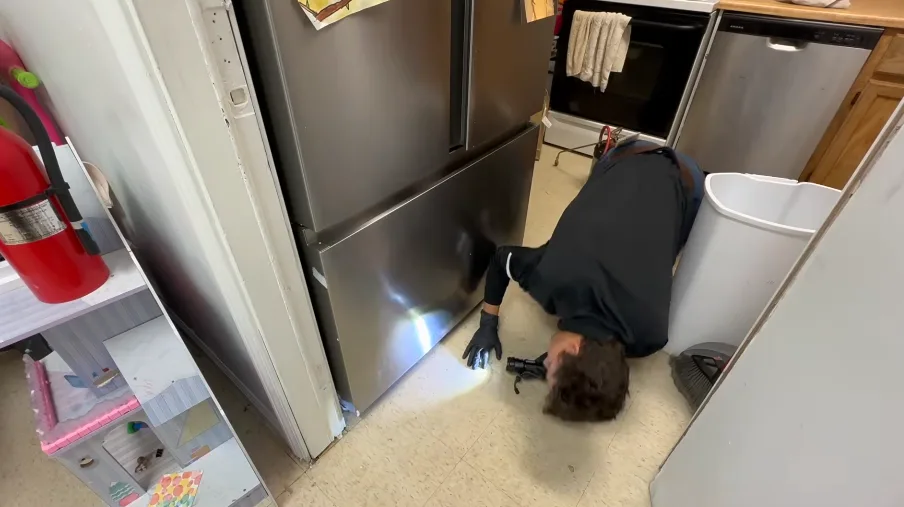
Commercial Is Usually a Norway Rat Problem
Residential Florida rodent work is dominated by roof rats in attics. Commercial work frequently is not. In restaurant, retail and warehouse settings the animal is more often the Norway rat, and almost everything about the job changes as a result.
Norway rats are larger, heavier and stockier, with a tail shorter than the body, and they are ground dwellers. They burrow in soil and live around storm drains, sewer laterals, dumpster pads, grease interceptors and utility trenches. The work happens at grade, not on a roofline.
That means the survey looks at different things: door thresholds and sweeps, weep holes, stem wall and slab penetrations, utility trench entry, dock levellers and roller shutter tracks, drain covers and grease line routes. Sealing is heavier, because Norway rats are stronger gnawers and commercial doors take abuse.
It also means the problem is usually shared rather than confined to your unit. A restaurant on a strip with a common dumpster enclosure is dealing with a population that belongs to the whole plaza. Effective commercial work usually has to address the site, which sometimes means a conversation with the landlord or the association rather than only with the tenant.
Health inspection coming? Get documentation in place.
Sectors
What Different Commercial Properties Need
- Restaurants and food service. Grease interceptors, waste handling, delivery doors and storage. Monitored programme with documentation you can hand to an inspector, scheduled around trading hours.
- Retail and strip plazas. Shared dumpster enclosures and common areas mean site level work rather than unit level. Landlord coordination usually required.
- Warehouses and distribution. Dock levellers, roller shutters, pallet storage and the perimeter. Large footprints where monitoring stations matter more than trapping bursts.
- HOAs and condominium associations. Shared attic voids and party wall construction. Work has to be scoped at building level, and documentation for board review is usually part of the deliverable.
- Property management and multifamily. Unit turnover inspection, and a route from tenant report to resolution that does not depend on the tenant chasing.
- Offices and medical. Discretion and scheduling matter as much as method.
In every one of those settings the deliverable is not just fewer rats. It is a documented, defensible record that you took reasonable action, which is what protects you in an inspection or a dispute.
Why poison is a poor fit commercially
A poisoned rodent dies inside the building envelope, and in a restaurant, a hotel or an occupied office that becomes an odour complaint in a space you cannot close. Mechanical trapping and exclusion give you a carcass you control the location of, plus a monitoring record. Rodenticide also carries secondary poisoning risk for Florida raptors and for pets in mixed use settings.
The Process
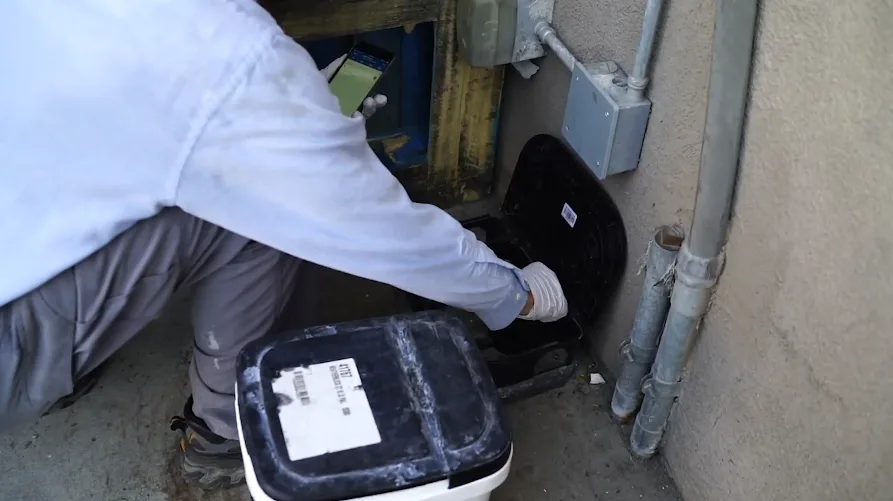
How Commercial Work Is Structured
- Site survey. Interior, exterior perimeter, waste handling and shared areas, not only your unit.
- Species identification. Norway rat, roof rat or both, because they need different work.
- Monitoring stations and trapping. Placed on runways and logged rather than set and forgotten.
- Exclusion. Door sweeps, threshold seals, penetration sealing and drain work, in heavier material than residential.
- Scheduled service visits. Around trading hours, with a written log at each visit.
- Documentation pack. The record you produce for a health inspector, a landlord or a board.
Commercial rodent control is a programme rather than a job. Anyone quoting a single visit resolution for a restaurant on a shared dumpster enclosure has not understood the site.
Get a site survey rather than a unit quote.
Cost
What Commercial Rodent Control Costs
Commercial work is normally quoted as a monitored programme rather than a one off, because the pressure is continuous and the documentation has ongoing value.
| Item | Typical range |
|---|---|
| Site survey | Quoted on property size |
| Monitored programme | Usually monthly or scheduled |
| Exclusion and door sealing | Quoted on openings |
| Emergency response | Available on programme |
| Documentation for inspection | Included |
The comparison worth making is not against a residential price. It is against a failed health inspection, a closure, or a lease dispute with a landlord about who was responsible. The documentation is often worth as much as the trapping.
Questions
Frequently Asked Questions
Is commercial the same service as residential?
No, and it should not be quoted as one. Commercial work is usually Norway rat focused at ground level: storm drains, dumpster pads, grease lines, door thresholds and utility trenches, delivered as a monitored programme with documentation and scheduled around trading hours.
I run a restaurant. What do I actually get?
A monitored programme with logged visits, exclusion of the openings that matter in food service, work scheduled around your hours, and a documentation pack you can hand to a health inspector. The record matters as much as the result.
My unit is clean but the plaza has rats. What can I do?
That is the common situation and it usually needs site level work rather than unit level. A survey that covers the shared dumpster enclosure and common areas gives you evidence to take to the landlord or association, which is often the only way it gets resolved properly.
We are an HOA. How does this work for shared buildings?
Scoped at building level rather than unit level, because shared attic voids and party wall construction mean treating one unit rarely holds. Documentation for board review is normally part of the deliverable.
Are the operators you refer licensed?
Yes. Florida regulates pest control under Chapter 482, Florida Statutes, administered by FDACS, and rodent work falls under General Household Pest and Rodent Control. Your assigned operator provides their licence number on your written estimate and you can verify it through the FDACS licensee search at fdacs.gov before work begins.
Do you use poison?
Not as a default. A poisoned rat does not go outside to die, it dies inside your wall, which turns a rodent job into an odour job. And rodenticide creates secondary poisoning risk for Florida owls, hawks and other raptors, as well as for pets. The approach is mechanical: trapping plus permanent exclusion.
Related services: Rat Removal, Rodent Exclusion, Rodent Inspection.
Coverage
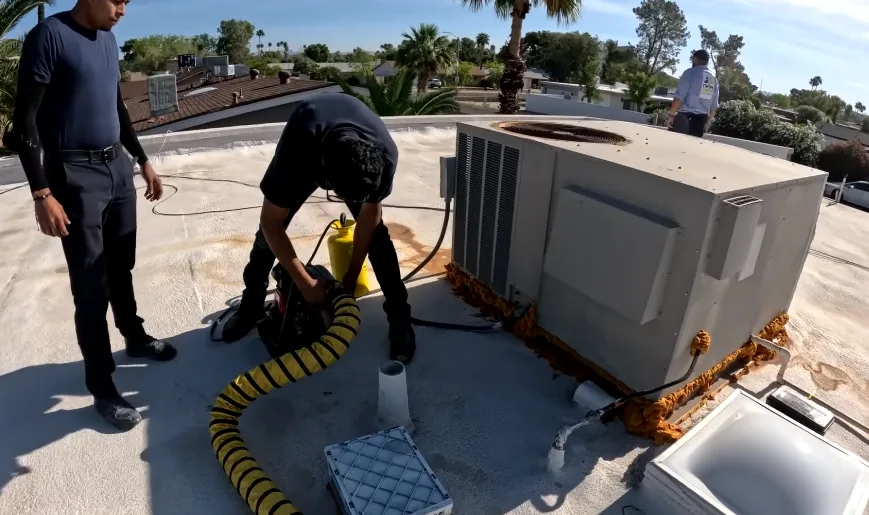
Commercial Rodent Control Across Nine Florida Regions
Commercial Rodent Control is available through the FDACS-licensed operators we refer across 178 Florida communities. The conditions differ by region, so pick yours below and the page will tell you what actually drives rodent problems there and every community we cover inside it.
Not sure which region you are in? Call with your ZIP and we will confirm coverage before anything is scheduled, or see the full Florida service area map.
Read Next
Guides Worth Reading Before You Book
Background reading that will help you judge a quote, understand what the work involves, and know what to expect before anyone comes out.
Protect the business before an inspector finds it.