

Removal
Mouse Control in Florida
House mice fit through a smaller gap than rats, breed faster and leave far more droppings per animal. If you are hearing heavy running overhead, it is probably not mice, and that difference changes the whole job.
Identification
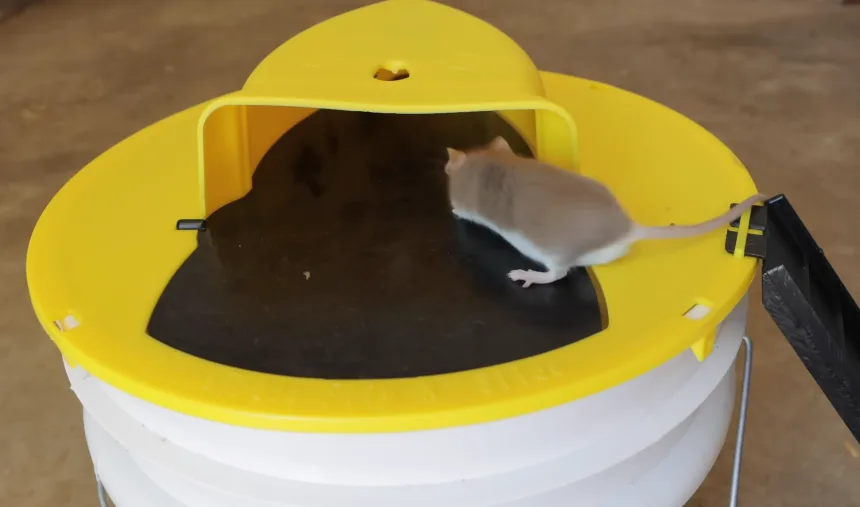
Mice Are Not Small Rats
The most useful thing to establish early is whether you actually have mice, because in Florida the default assumption should usually be roof rats. The University of Florida IFAS Extension identifies the roof rat as the worst rodent pest in the state, and heavy running overhead at night is far more likely to be a rat than a mouse.
House mice are much smaller, they fit through a considerably smaller opening, they breed faster and they produce far more droppings per animal than rats do. Their droppings are small, dark and rod shaped rather than the black banana shape of a roof rat.
The practical differences matter. Mice need finer exclusion, because an opening a rat cannot use is still a mouse highway. They also need different trap sizing and placement, because mice range over much shorter distances than rats and will not travel far to a trap.
What that means is that a rat programme applied to a mouse problem underperforms, and a mouse programme applied to a rat problem fails outright. Identification is not a formality here.
Not sure which you have? Identification is part of the free inspection.
Where They Get In
The Openings That Matter for Mice
- Gaps you would not consider. Mice need far less than the half inch a rat requires, so the threshold for what counts as an opening drops considerably.
- Garage door corner seals. Where the rubber meets the jamb, and one of the most common mouse entries in Florida.
- Utility and plumbing penetrations under sinks and behind appliances. Frequently unsealed inside cabinetry where nobody looks.
- Weep holes and stem wall penetrations. Ground level access straight into the wall cavity.
- Dryer vents and low wall penetrations. Especially where the exterior flap has failed.
- Interior wall voids from an attached garage. The garage is very often the staging point before the house.
Because the threshold is smaller, mouse exclusion is finer detail work than rat exclusion. Copper mesh packed into small irregular gaps does more of the load here than sheet metal does.
Why sanitation matters more with mice
Mice produce a very large number of droppings, and they contaminate food storage more readily than roof rats do because they are more willing to live inside the conditioned envelope rather than the attic. Pantry management, sealed food storage and dealing with pet food overnight makes a bigger practical difference to a mouse problem than it does to an attic rat problem.
The Process
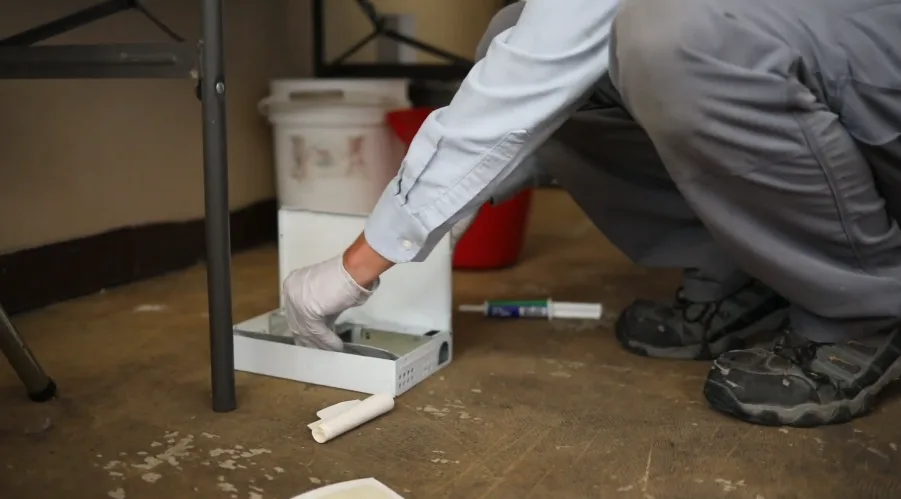
How Mouse Control Is Done
- Identification. Confirming mice rather than rats, because the programmes are different.
- Interior and exterior survey. Including inside cabinetry, behind appliances and in the attached garage.
- Trapping placed for short ranges. More traps, closer together, on the runways.
- Fine exclusion. Copper mesh and sealant into small gaps, plus the usual metal at larger openings.
- Verification. Zero activity confirmed before final sealing.
- Sanitation advice. Food storage and pet food, which does real work with mice.
Mice breed quickly, so the gap between noticing and acting matters more than it does with an established roof rat colony. A small mouse problem escalates faster.
Get it identified and dealt with before it multiplies.
Cost
What Mouse Control Costs in Florida
These are published national and Florida ranges. Mice are generally cheaper to remove than rats and comparable to seal, because although the material is lighter the detail is finer.
| Item | Typical range |
|---|---|
| Rodent inspection | $75 to $150, often credited against the job |
| Mouse extermination | $150 to $550 |
| Mice in the attic, higher end of that range | |
| Exclusion, newer home | $500 to $800 |
| Exclusion, older home with many small gaps | $1,500 to $3,000 |
Rats generally cost more to remove than mice because they need larger traps, more visits and heavier exclusion material. Where mouse exclusion catches up on price is the number of small openings, since the threshold for what has to be sealed is much lower.
Questions
Frequently Asked Questions
How do I know if I have mice or rats?
Size and sound. Mice are much smaller and quieter, with small dark rod shaped droppings. Roof rats produce black banana shaped droppings a quarter to half an inch long and make noticeably heavier running sounds overhead. In Florida, heavy overhead activity at night is far more likely to be roof rats.
What size gap can a mouse get through?
Considerably less than the half inch a roof rat needs. That is why mouse exclusion is finer detail work and why an opening that would not admit a rat still has to be sealed.
Why do I keep finding droppings in the kitchen?
Mice are more willing than roof rats to live inside the conditioned envelope rather than the attic, so contamination shows up in cabinetry and pantry areas. Sealed food storage and dealing with pet food overnight makes a real difference alongside the trapping and sealing.
Do mice come from the garage?
Very often, yes. An attached garage is a common staging point before the house, and the corner gaps where the garage door seal meets the jamb are among the most common mouse entries in Florida.
Are the operators you refer licensed?
Yes. Florida regulates pest control under Chapter 482, Florida Statutes, administered by FDACS, and rodent work falls under General Household Pest and Rodent Control. Your assigned operator provides their licence number on your written estimate and you can verify it through the FDACS licensee search at fdacs.gov before work begins.
Do you use poison?
Not as a default. A poisoned rat does not go outside to die, it dies inside your wall, which turns a rodent job into an odour job. And rodenticide creates secondary poisoning risk for Florida owls, hawks and other raptors, as well as for pets. The approach is mechanical: trapping plus permanent exclusion.
Related services: Rodent Exclusion, Rat Removal, Rodent Inspection.
Coverage
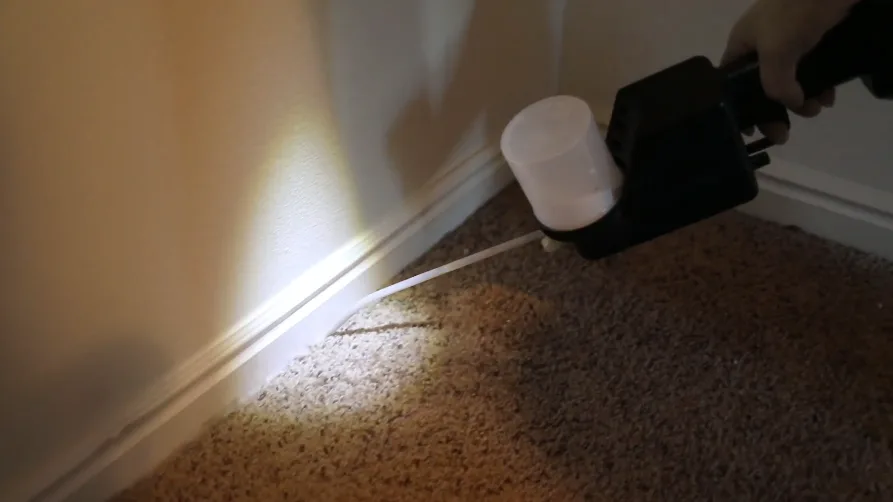
Mouse Control Across Nine Florida Regions
Mouse Control is available through the FDACS-licensed operators we refer across 178 Florida communities. The conditions differ by region, so pick yours below and the page will tell you what actually drives rodent problems there and every community we cover inside it.
Not sure which region you are in? Call with your ZIP and we will confirm coverage before anything is scheduled, or see the full Florida service area map.
Read Next
Guides Worth Reading Before You Book
Background reading that will help you judge a quote, understand what the work involves, and know what to expect before anyone comes out.
Small problem now, larger problem in a month. Get it looked at.