

Palm Beach County | Wellington · Loxahatchee · Grand Prix Village
The Rats Are in the Feed Room, Not the House: Wellington and Loxahatchee
On equestrian property the house is almost always the second stop. If a company quotes your roofline without asking how your grain is stored, they have priced a fraction of the job.

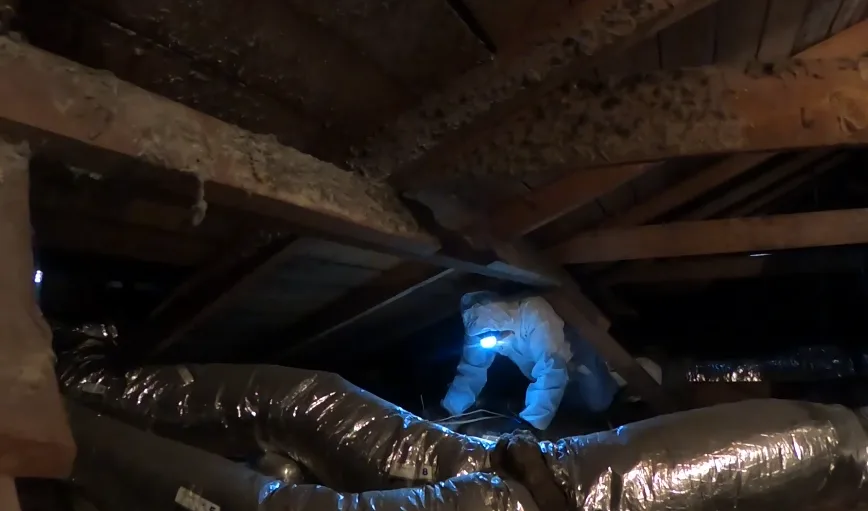
Why do Wellington and Loxahatchee homes keep getting rats after treatment?
Because the population is living in the barn, feed room or tack room rather than the house. Grain, sweet feed, hay and bedding are a complete year round food supply in a building that is warm, dry and undisturbed at night. The house only becomes involved when temperatures dip or a barn gets cleaned out. Sealing the house alone on equestrian acreage gives you a quiet month followed by a noisy season, because the source was never touched.
The Diagnosis
Follow the Food, Not the Noise
Wellington, Grand Prix Village, Palm Beach Point, Loxahatchee and The Acreage are equestrian country at a density few places match, and it changes the rodent problem completely from what the coastal side of the county deals with.
A barn with grain, sweet feed, hay and bedding is close to a perfect rodent environment. It offers unlimited high calorie food, deep nesting material, warmth, and near total absence of disturbance between evening feed and morning. A house offers none of those things as reliably.
So the population establishes in the barn, sometimes for a long time, and the house gets involved only when something changes: a cold snap, a barn clear-out, a feed delivery pattern shifting. That is why the noise in the house often seems to appear from nowhere.
The Test
Questions a Competent Quote Asks First
If somebody quotes your house without asking any of the following, they have priced part of the job:
- How is grain and feed stored? Sealed metal bins with tight lids, or paper sacks and open barrels.
- Where is hay and bedding kept? Off the floor and away from walls, or stacked directly against them.
- Has the tack room or feed room been showing droppings? Usually the answer is yes and nobody had connected it.
- Is there spilled grain around the feed area? Daily sweeping matters more than most exclusion.
- Are there other outbuildings? Equipment sheds, workshops, hay barns and run-in sheds all count.
What You Fix Yourself
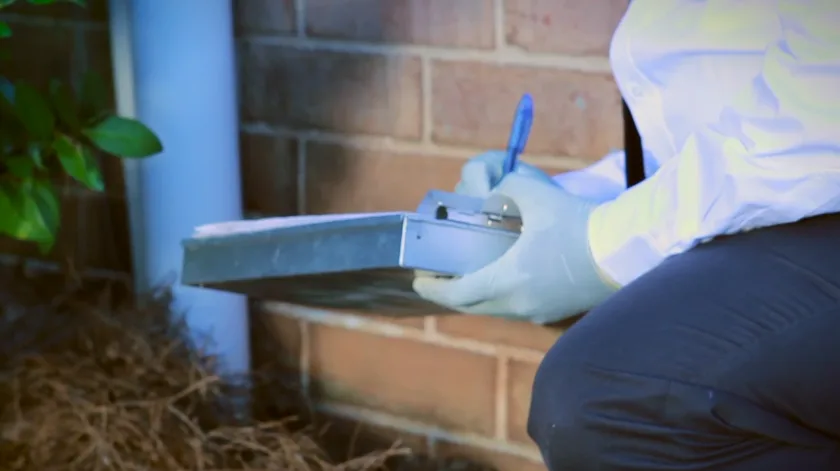
The Cheapest Wins Are Not Exclusion
On equestrian property, a meaningful share of the improvement comes from storage rather than sealing, and it costs almost nothing.
- Sealed metal feed bins rather than paper sacks or plastic tubs. Rodents chew both plastic and paper. Galvanised bins with tight lids they cannot.
- Hay and bedding off the floor and away from walls, so the stack is not itself a nest and the perimeter can be inspected.
- Spilled grain cleared daily around the feed area and along the aisle.
- Cat and dog food brought in rather than left out overnight, which is a supply nobody counts.
- Water sources checked: dripping hydrants, leaking troughs and standing water in the wash rack.
Doing that first frequently does more for a Wellington rodent problem than anything done to the house, and it makes the exclusion that follows hold far longer.
Poison
Why Baiting a Barn Is a Bad Trade
This matters more on equestrian land than almost anywhere.
Barn cats, working dogs and the substantial owl and raptor population across western Palm Beach County all predate rodents, and owls in particular are genuinely effective on agricultural land. A poisoned rodent moves that toxin straight up the food chain, so you remove the predators that were working for you free of charge.
Rodenticide near feed storage, water troughs or a wash rack is also an obvious hazard around horses, and a poisoned animal that dies inside a wall or under a floor becomes an odour problem in a building you use daily.
Scope
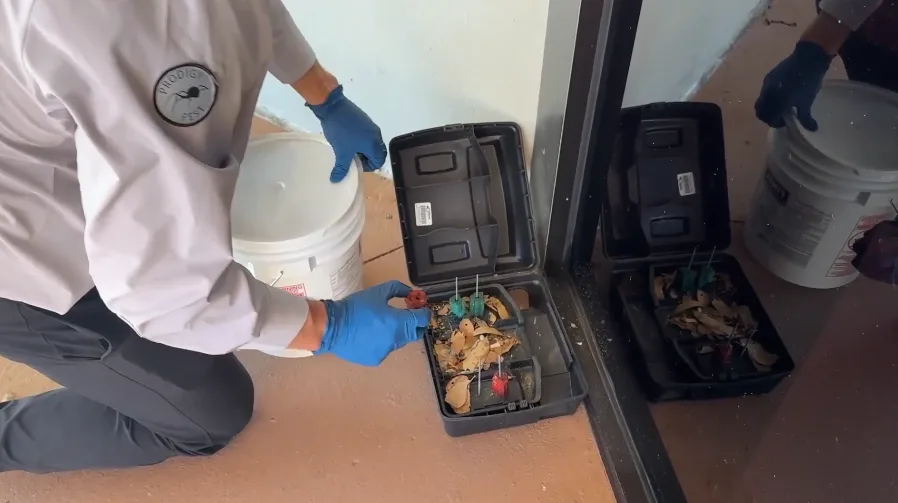
What This Costs, Honestly
A barn is a building in its own right, and equestrian property is genuinely several structures rather than one.
The house alone with three to five entry points typically runs $500 to $800 in sealing. Property with a barn, feed room, tack room and equipment shed in scope sits well above that, and it should be quoted structure by structure rather than as a single number.
That is not padding. A quote that covers only the house on a Wellington property is cheaper because it is doing less, and it is the reason the work does not hold.
Equestrian property? Tell us about the feed storage when you call.
Questions
Frequently Asked Questions
I have horses and a barn. Does that change the job?
It usually is the job. Grain, hay and bedding are a complete year round supply in a building that is warm, dry and undisturbed at night, so the population establishes there long before anything shows in the house.
What can I fix myself?
A lot. Sealed metal feed bins rather than paper sacks, hay and bedding off the floor and away from walls, spilled grain cleared daily, pet food brought in overnight, and dripping hydrants or troughs repaired.
Why not just bait the barn?
Barn cats, working dogs and the local owl and raptor population all predate rodents, and poison moves up that food chain. Rodenticide near feed, troughs or a wash rack is also a hazard around horses, and a poisoned animal dying inside a wall becomes an odour problem.
Should the quote cover the barn separately?
Yes. A barn is a building in its own right and equestrian property is several structures. Ask for it quoted structure by structure rather than as a single number, so you can see what is actually in scope.
Could I have Norway rats rather than roof rats?
Very possibly on agricultural property, and you may have both. Overhead noise at night is roof rats and the work happens on the roofline. Burrows near a foundation, feed store or fence line is Norway rat and the work happens at grade.
Areas Covered in This Post
Where This Applies
- Rodent Control Wellington
- Rodent Control Loxahatchee
- Commercial & Agricultural Rodent Control
- Roof Rat vs Norway Rat
More from the Palm Beach County blog, or see the Palm Beach County service area page.